Costa Rica
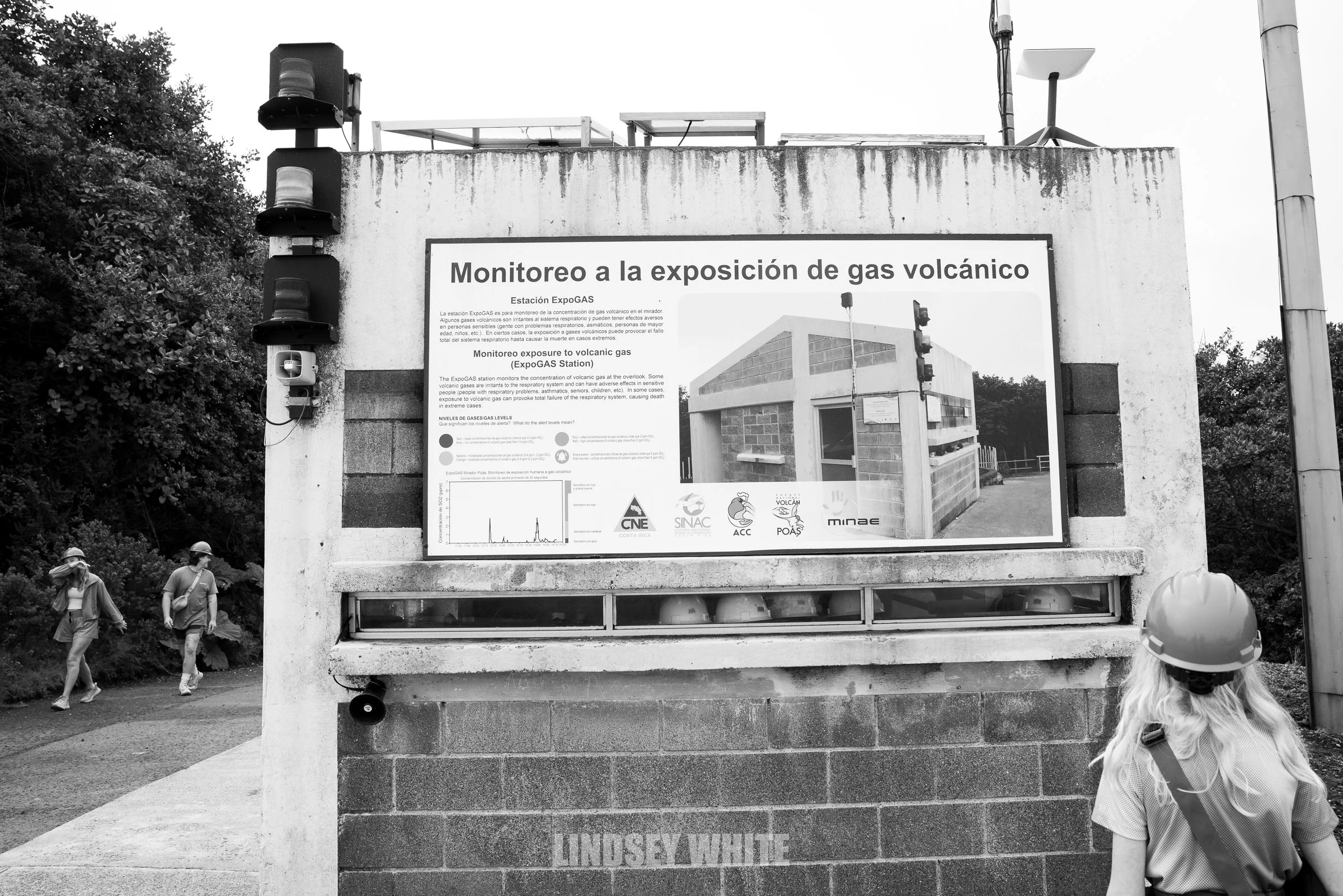
We took a trip to a volcano and while it was too cloudy to actually see it, we could certainly smell it. My anxiety riddled son was not amused that there was a volcanic erruption shelter.

Driving in San Jose is not for the faint of heart or timid. I would classify their driving as “politely aggressive”. They will let you in, but you better get the hell in there and not mess around. If you’re comfortable driving in Texas, you’ll be alright.
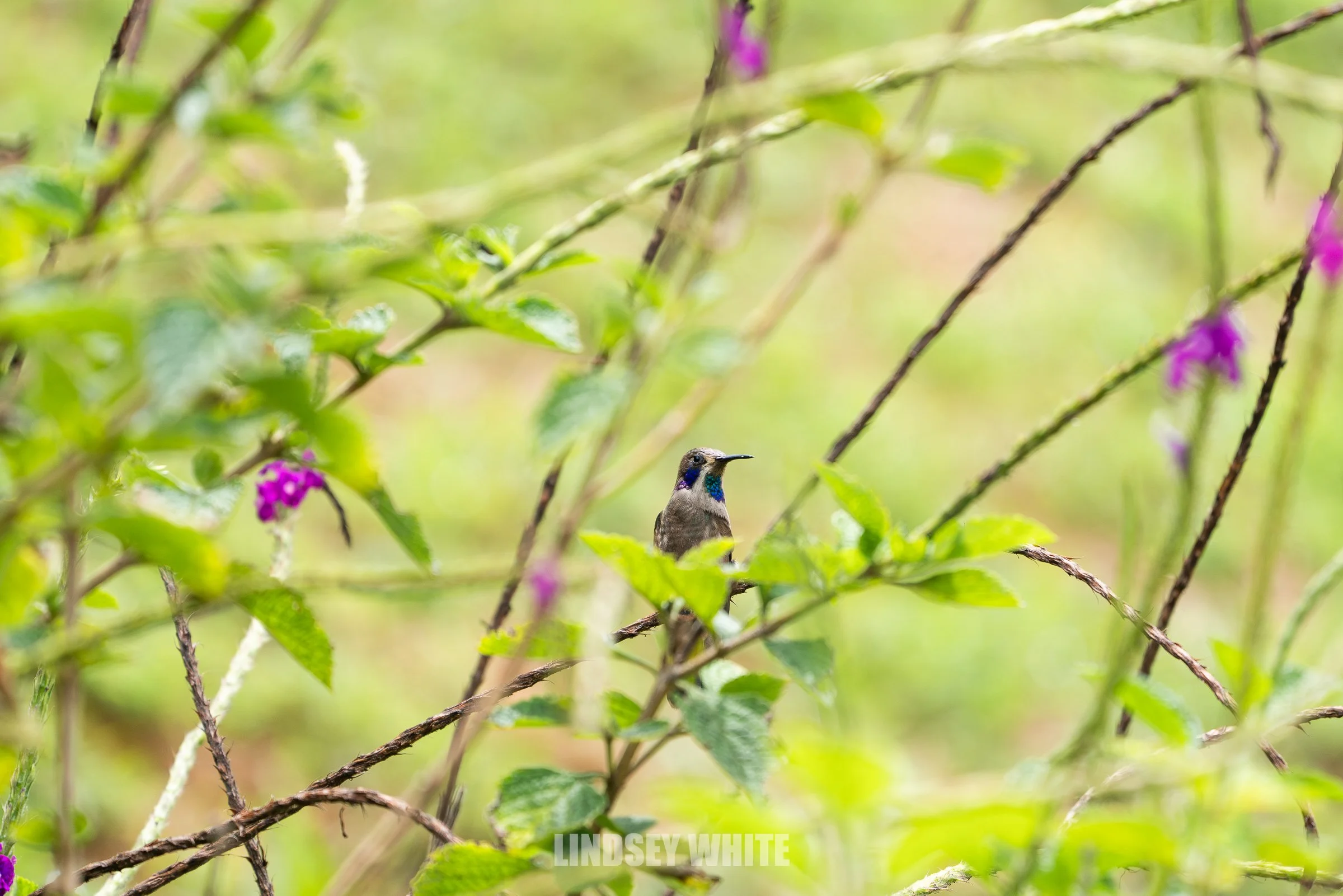
After following signs up a mountain to a national park that was definitely NOT accessible via the route we went, we pulled off in a random area and saw this gorgeous brown violetear (Colibri delphinae). While they’re not as flashy overall as some of their relatives, they are still pretty spectacular. Shoutout to the Hyandai Tucson we ended up with. While NOT comparable to the Land Rover we asked for, regardless of how hard the rental place tried to defend it, it made it up that mountain when we were all in agreement that it should, in fact, have not.
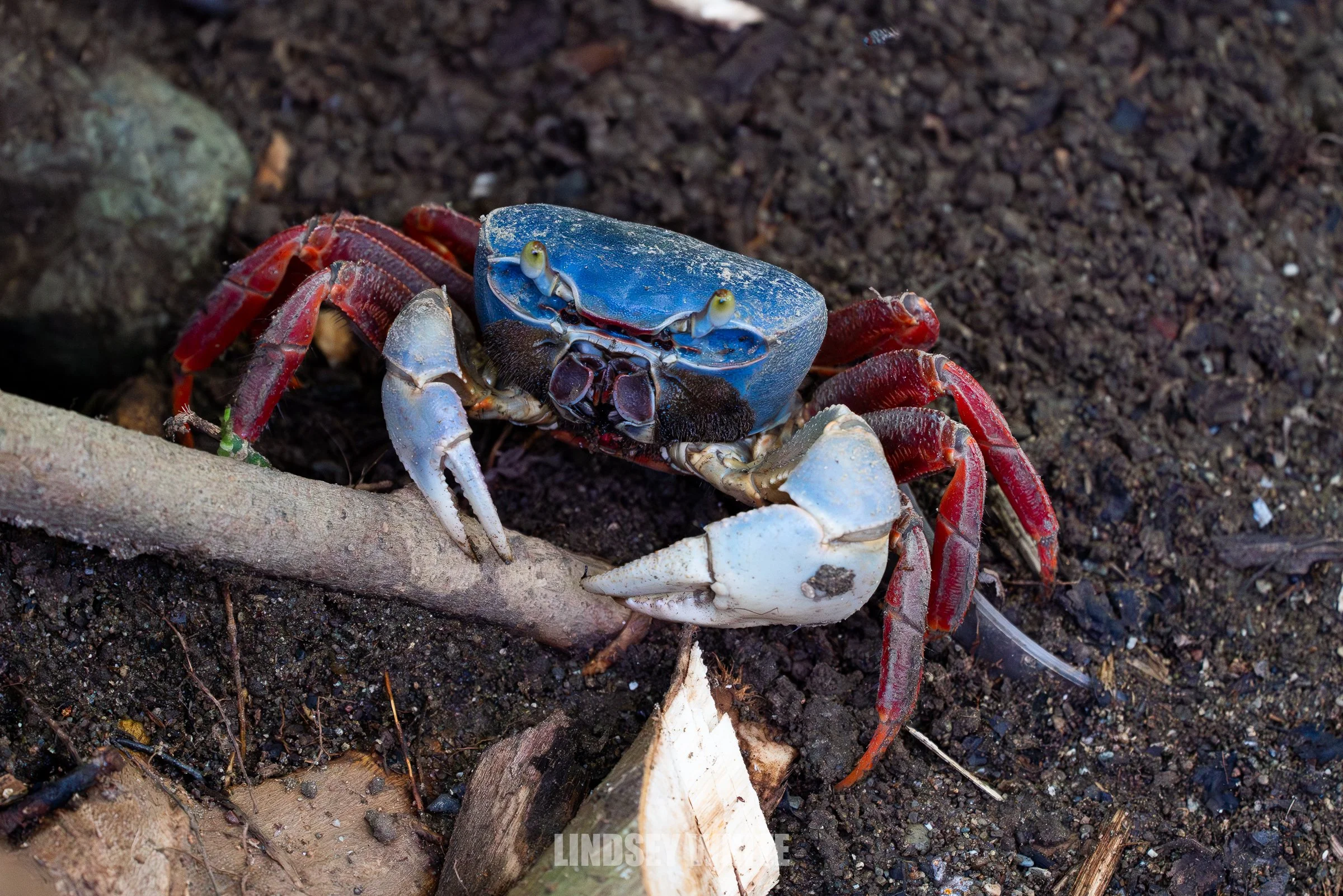
There were blue crabs everywhere at our resort among the mangroves. These crabs are primarily terrestrial and like to burrow near the base of trees. This one in particular was pretty curious and kept creeping closer, probably to see if we had anything to eat. Or were edible ourselves.
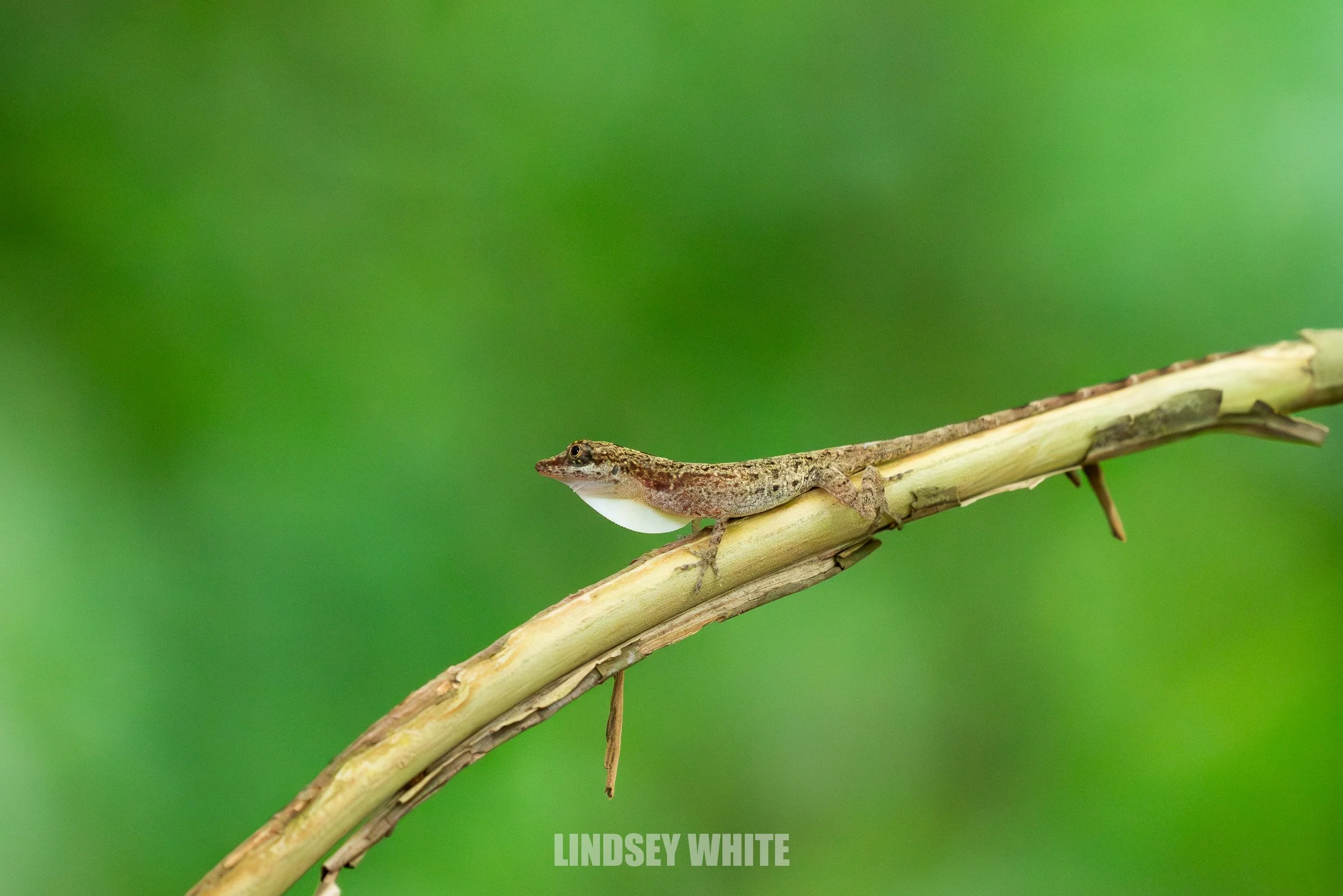
An anole. Honestly, I’m not sure which one. While I appreciate the role all things play in their ecosystem, my opinion of anoles is… I don’t really have one.
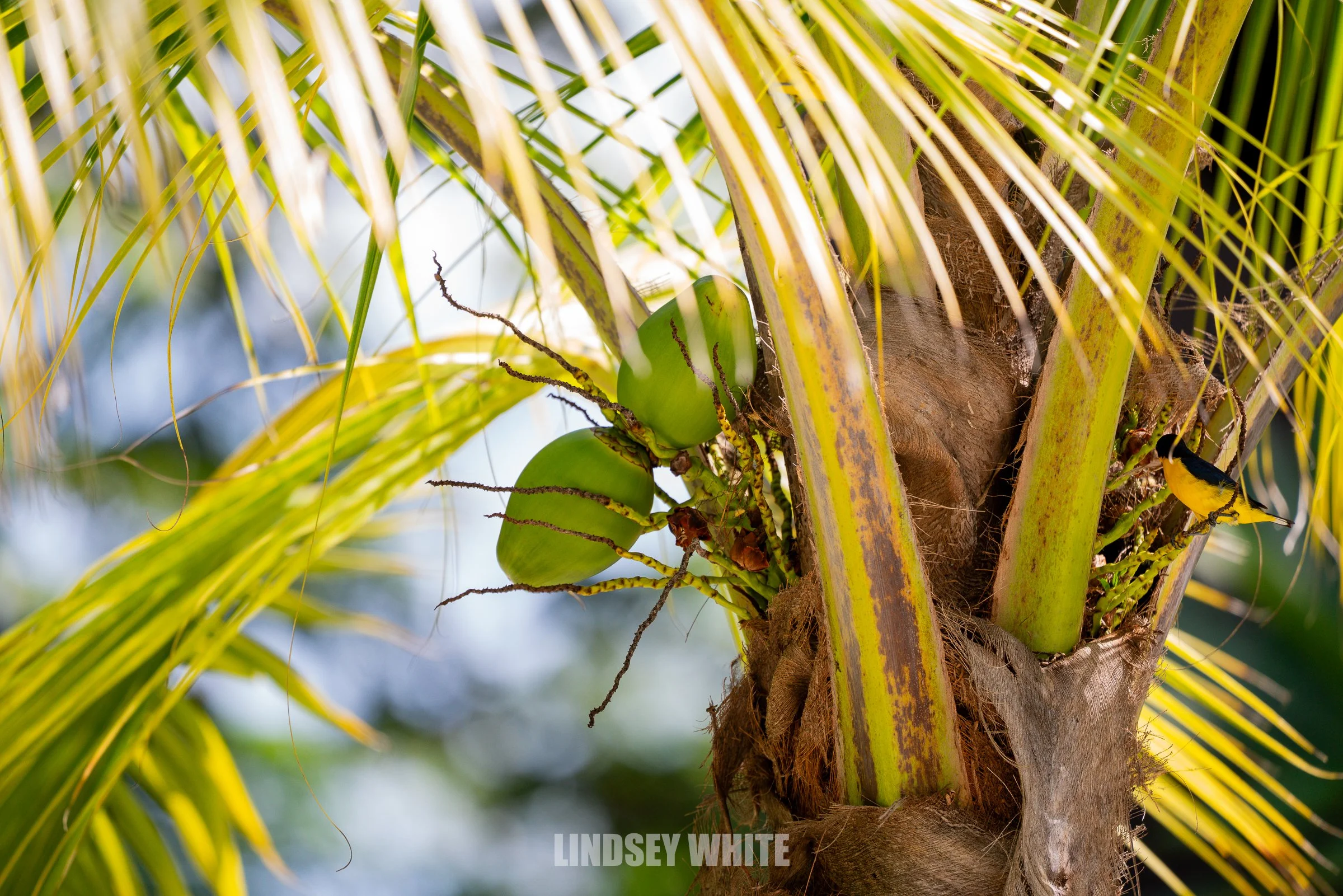
A well-hidden yellow-throated euphonia (Euphonia hirundinacea) in a coconut tree. To be totally honest, I had no idea that bird was even there until after I got home.
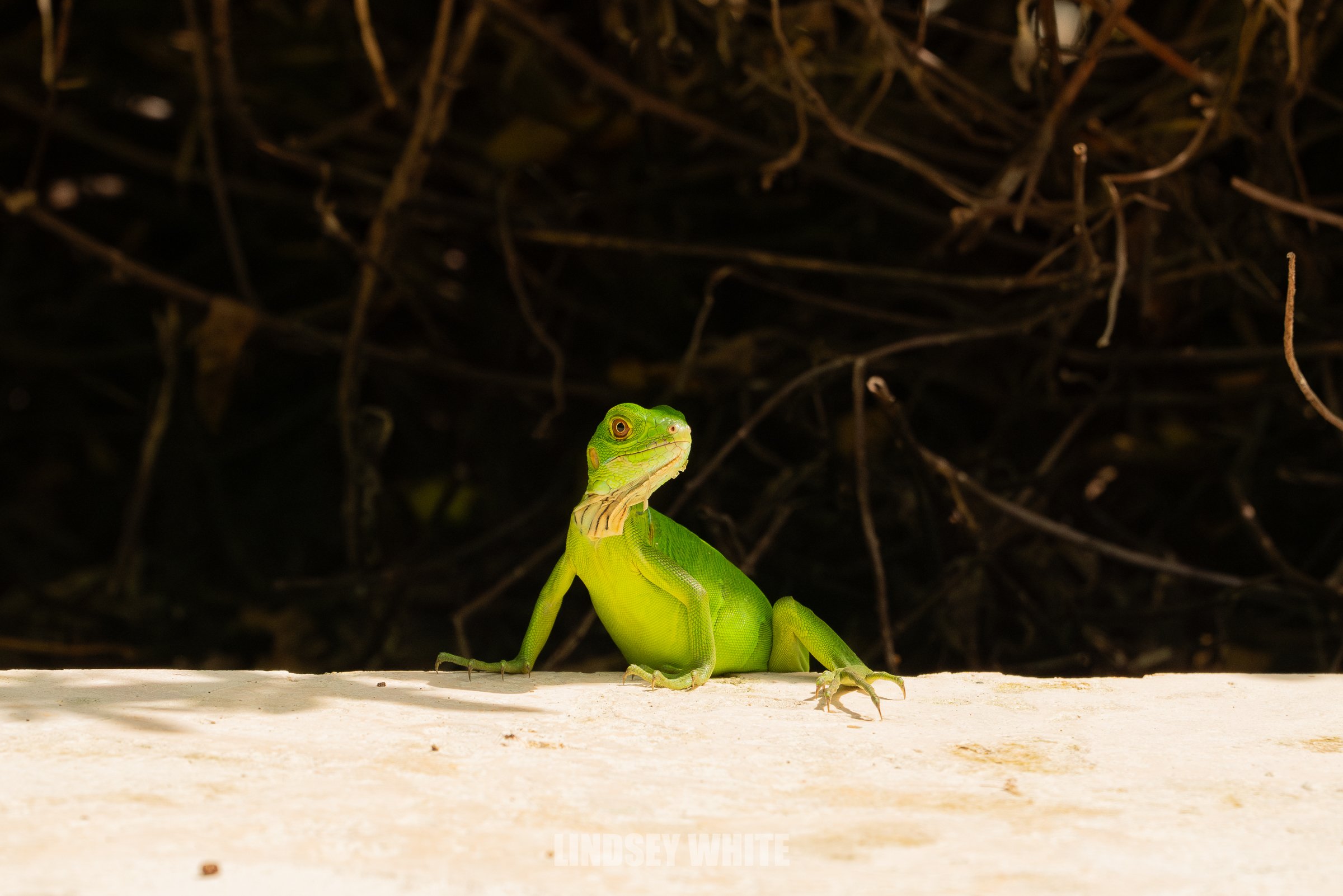
A young Green iguana (Iguana iguana) invited itself to hang out at the pool. It’s cool; they’re native here. Also, side note, I love it when the latin name is a tautonym. Iguana iguana. Bison bison. Vulpes vulpes. Makes it easier to remember and is honestly so fun to say.
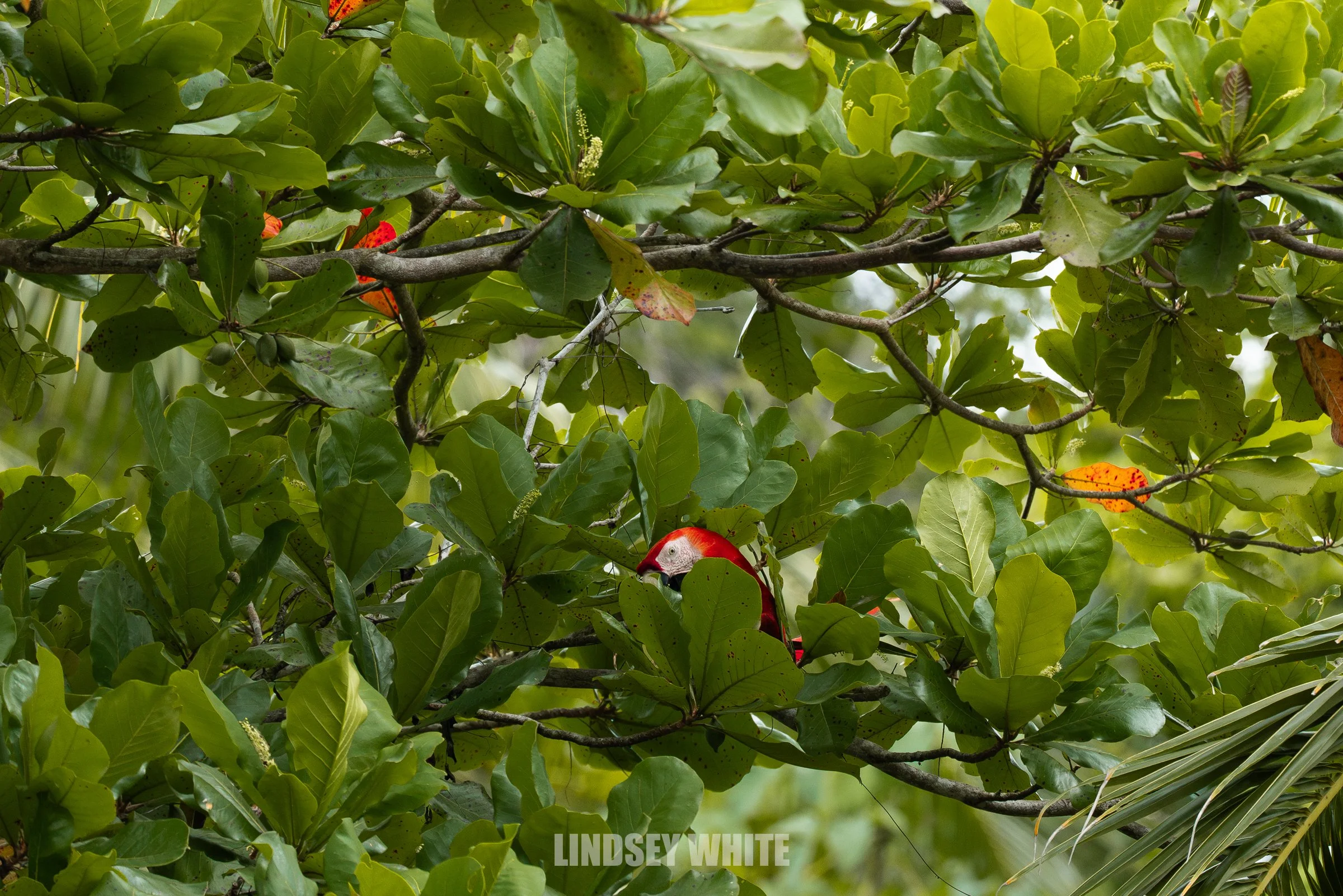
A macaw hiding in a mangrove tree. Seriously the loudest and least sneaky bird I’ve ever seen.
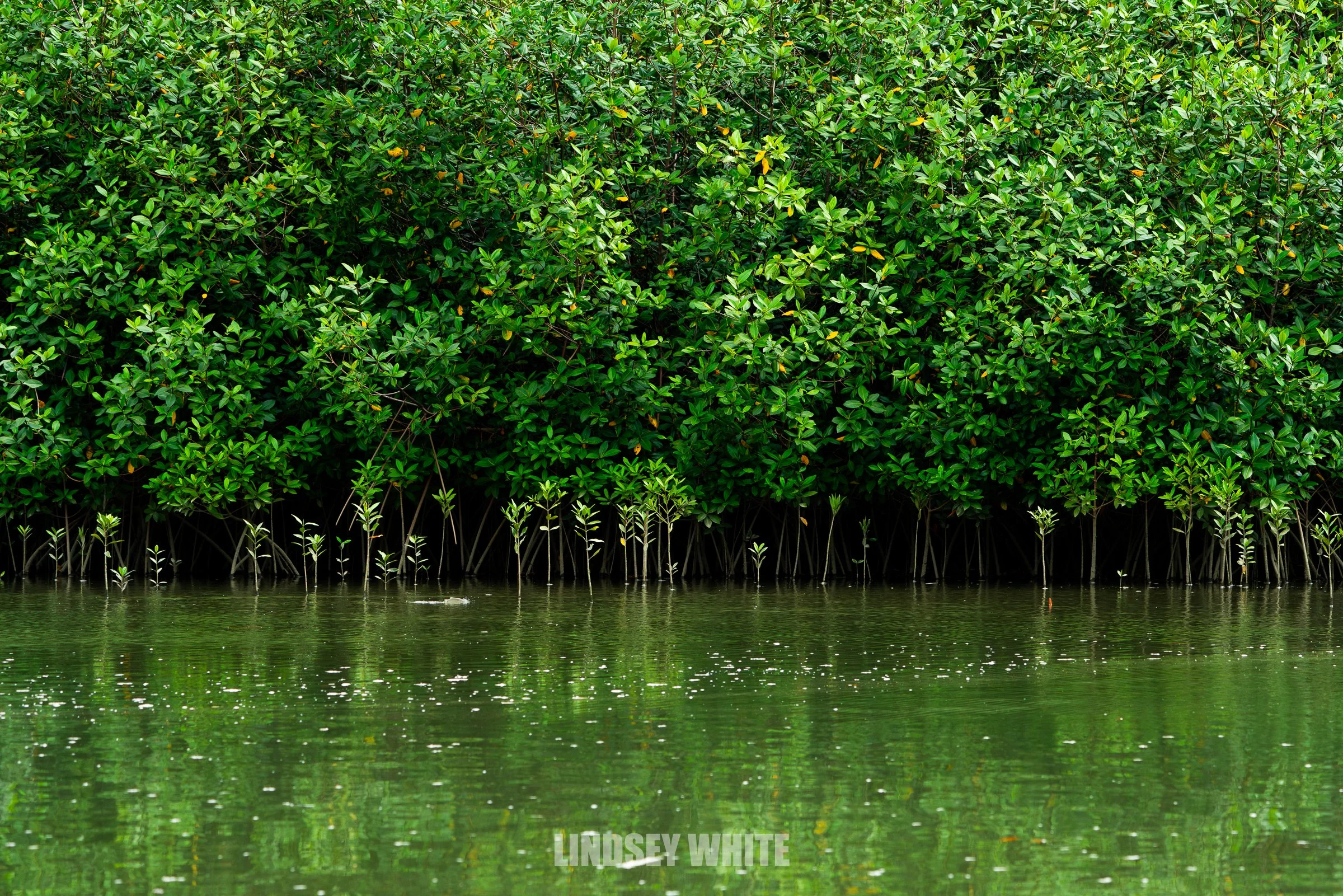
Mangroves are seriously incredible. They grow in saltwater, but like all living things, too much salt will kill them. So they have some pretty badass adaptations to deal with it. Some have built in filtration in their roots (exclusion), some have special glands in their leaves to excrete excess salt (excretion), and some store all the salt in older leaves which eventually fall off (accumulation). The orange and red leaves on these mangrove trees are the sacrificial leaves to store excess salt.
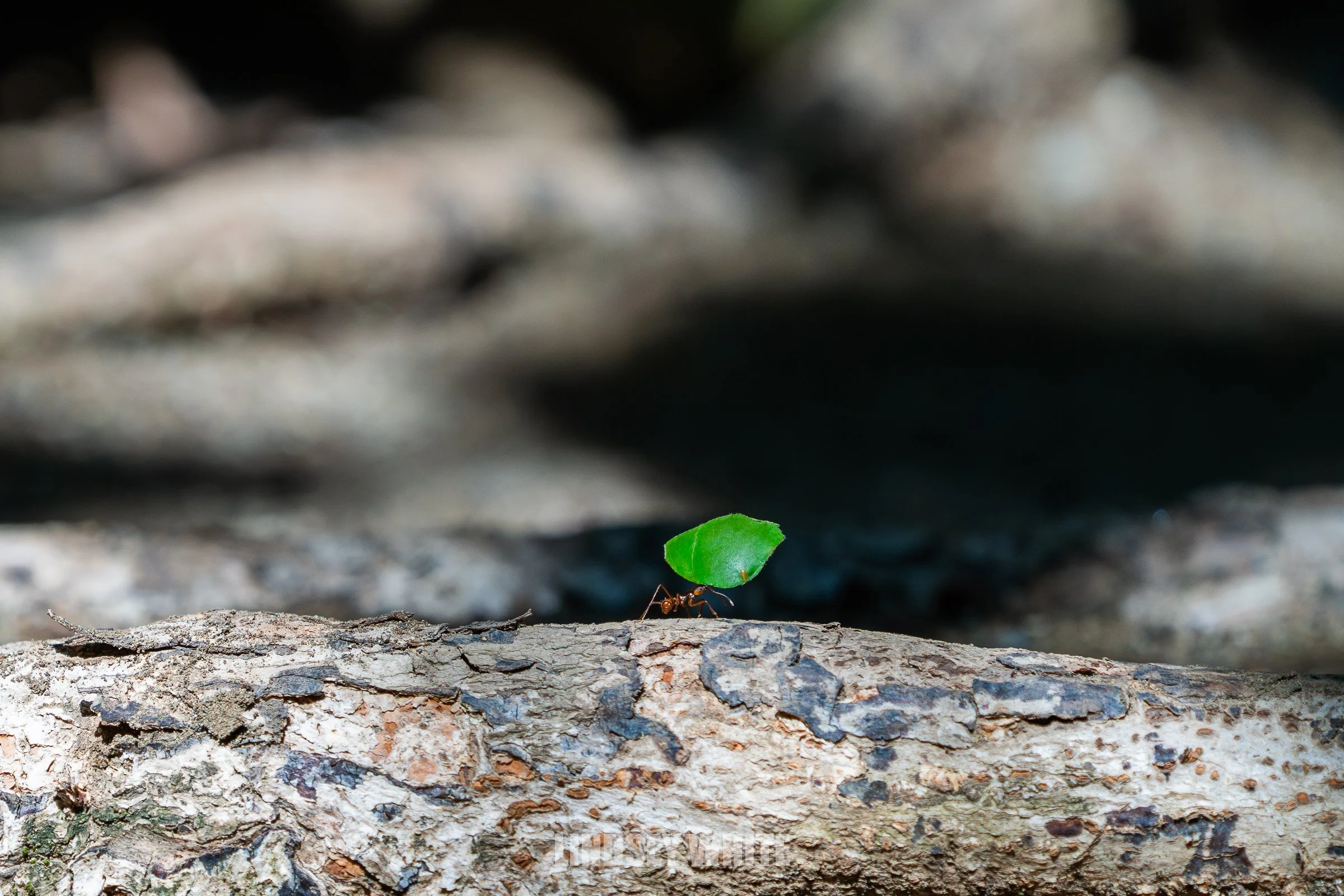
Leaf cutter ants are some of the coolest creatures on the planet, in my opinion. They don’t eat the leaves they harvest; instead, they chew them up into a sort of mulch mixed with saliva and feces which is used to grow a fungus (Leucoagaricus gongylophorus). The fungus breaks down the vegetation and the ants eat a specific part of the fungus. Really just the coolest lil gals.
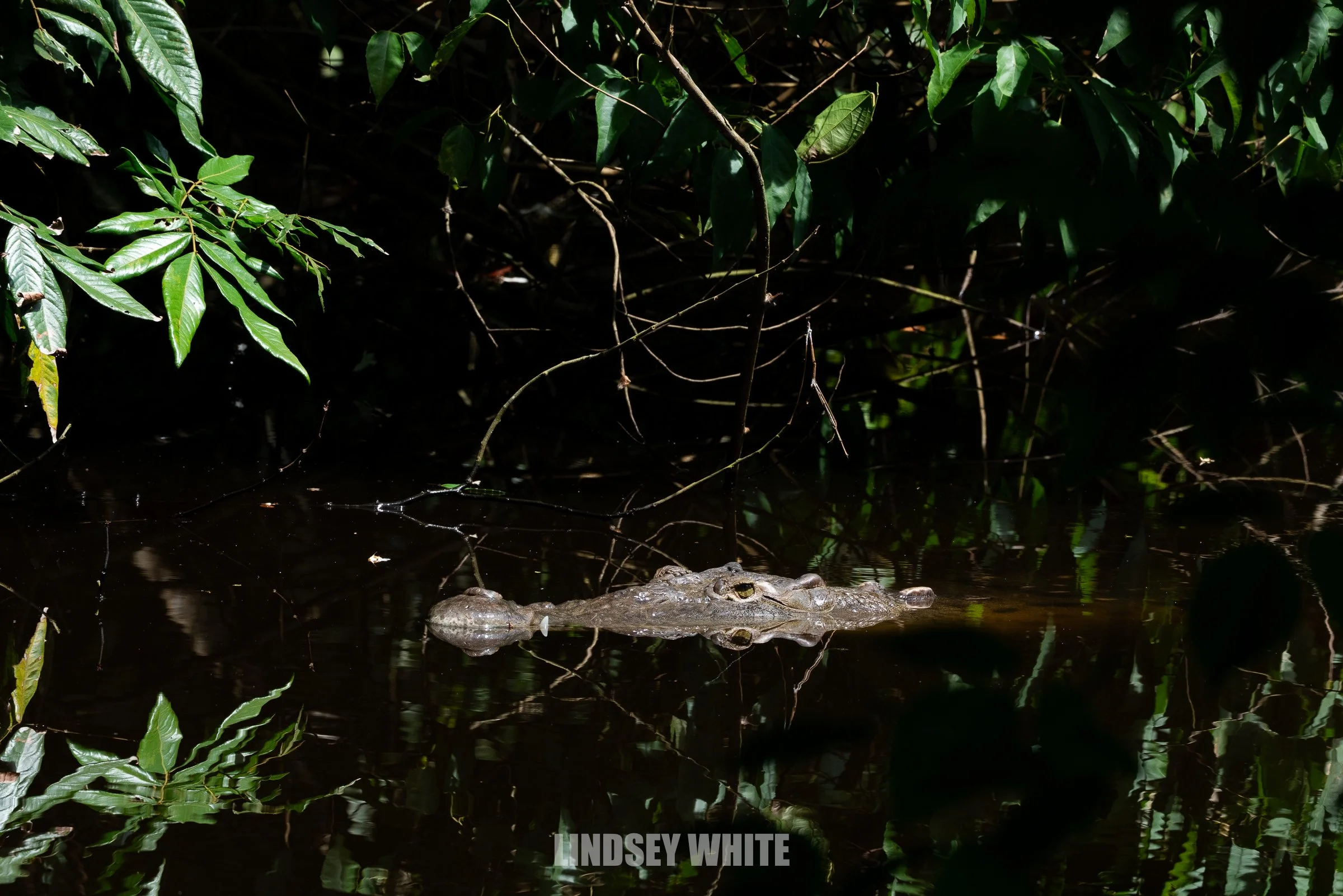
I heard a frog, so naturally I followed the frog noise to the inlet by our resort. Some staff walked up and started speaking quickly in Spanish. They stood by me and threw a large rock about 10 feet away, and this is what popped up. I decided at that moment that maybe standing by the edge of the water to look for frogs was not a great idea. You haven’t lived until you have been at least a little hunted by a very large American crocodile.
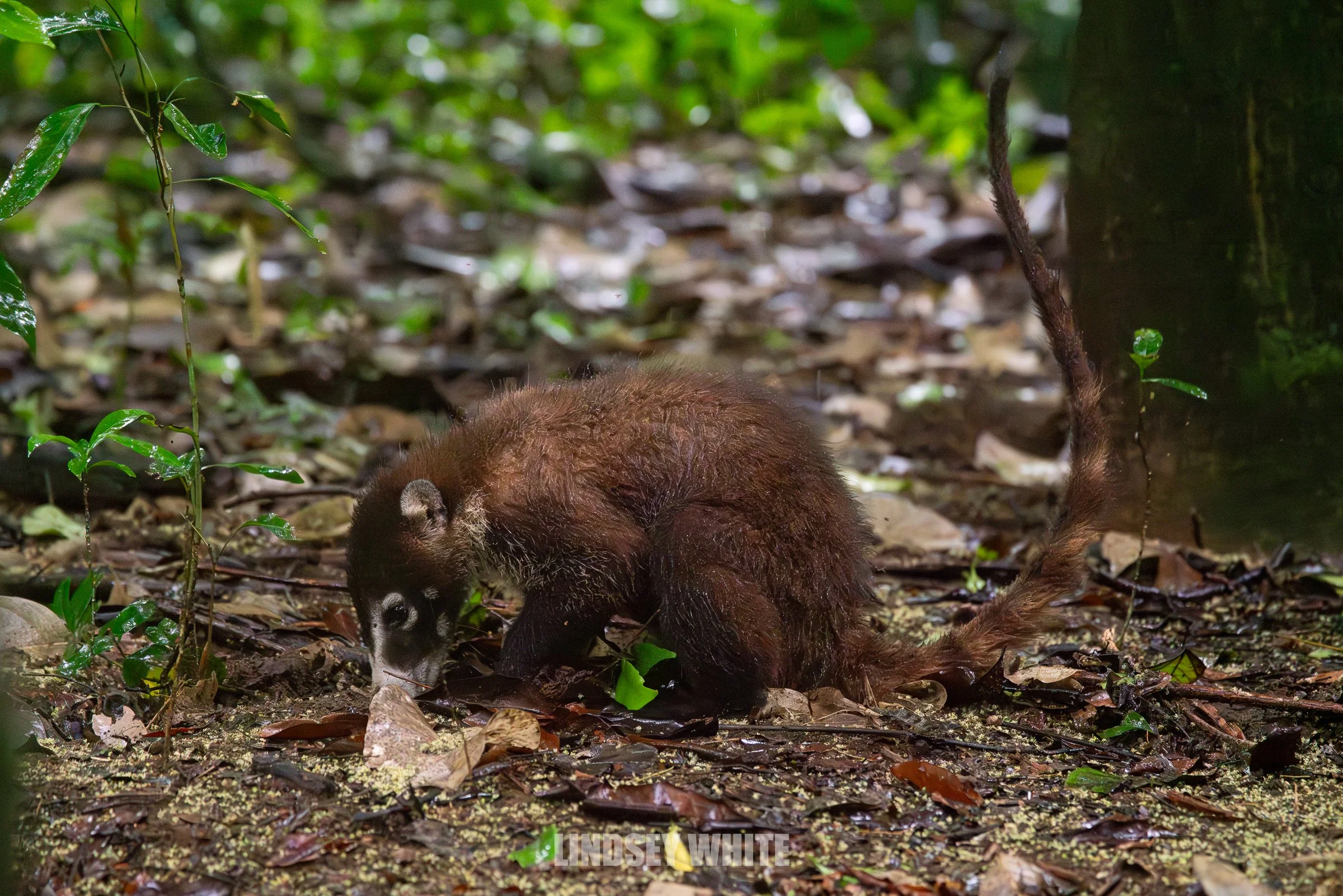
Look. At. This. It’s a coatimundi. AKA rainforest raccoon. And this was the absolute highlight of my guided forest hike through Corcovado national park. I can’t even handle how cute these guys are. Yes, I know we have them in some places in the US but I had never seen on in real life before and I about lost it. My poor guide had to listen to me say things like “Ohhhhh he’s just a wittle guy! He wants snackies! Look at his lil hands!!!”. I regret nothing.
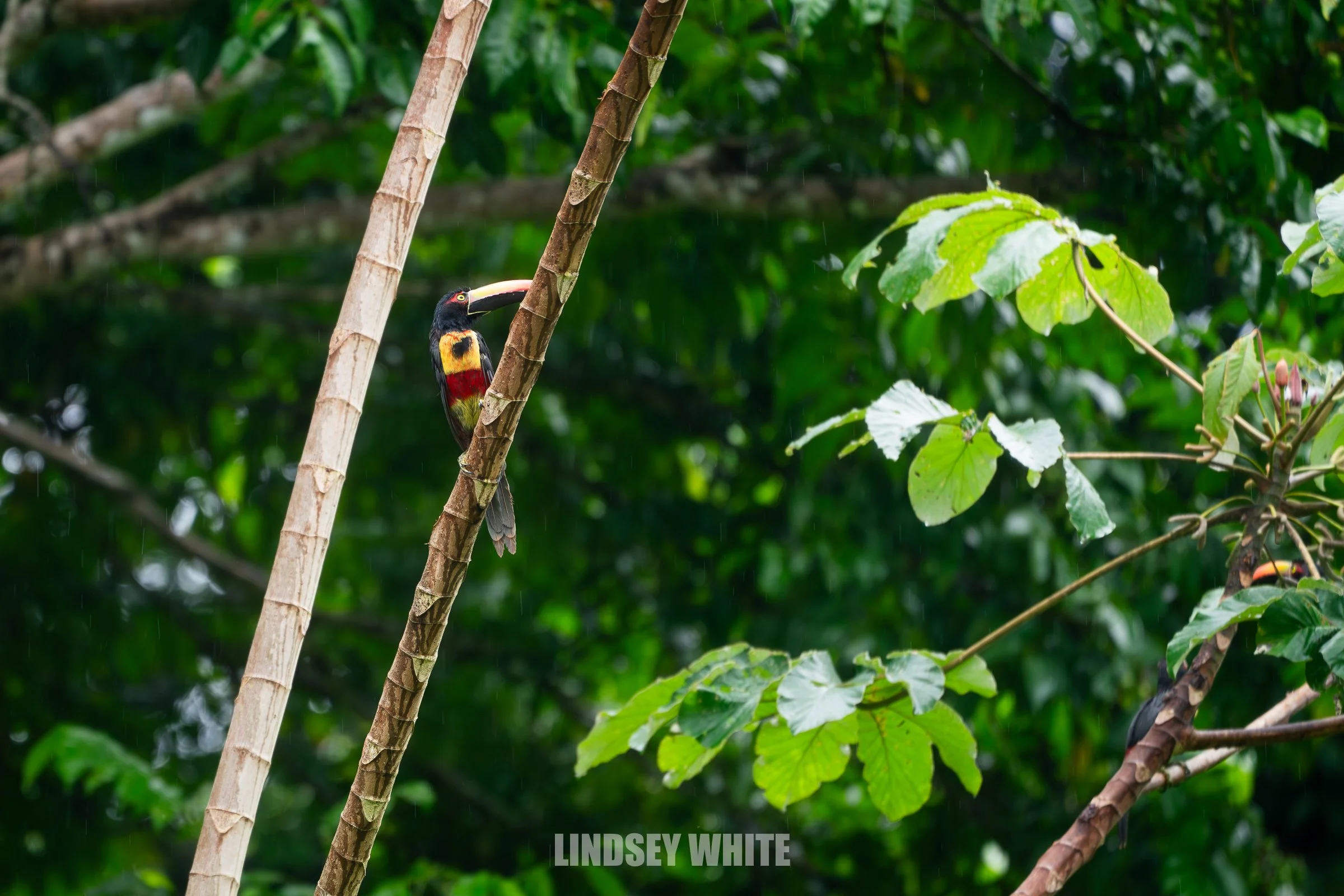
A group of fiery billed aracari (Pteroglossus frantzii) followed us for a bit through the rainforest, watching us closely. I learned from my guide that they will sometimes eat the eggs of woodpeckers, chase the parents from their nest cavities in trees, then use that cavity to raise their own young. Nature is pretty metal.
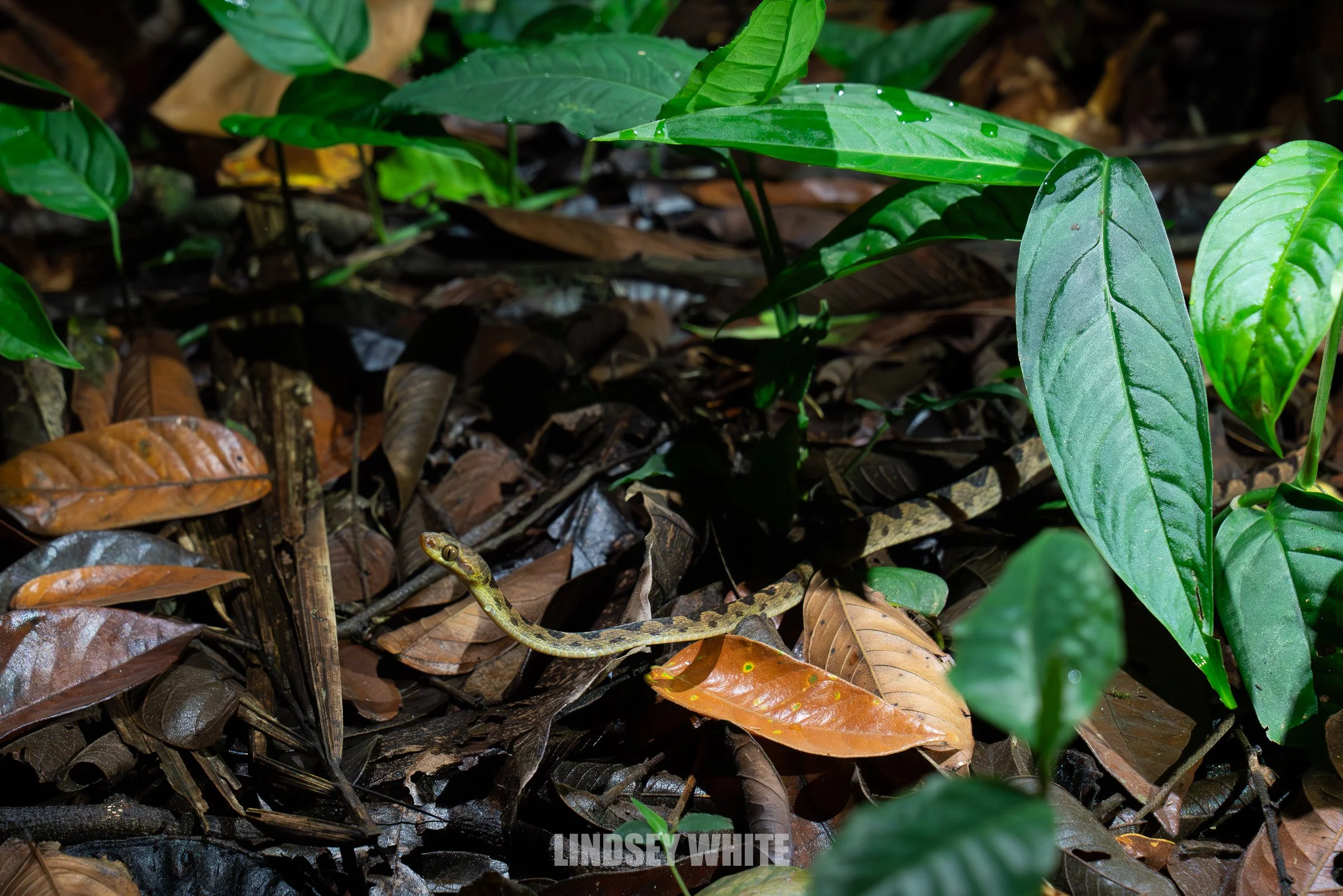
I set out to find a fer de lance, and while we were unsuccessful in that mission, we did find this absolutely snoot-boopable northern cat-eyed snake (Leptodeira septentrionalis). But I’m not a fan of harassing wildlife and these guys are mildly venomous, so we kept our distance. His snoot lives another day unbooped.
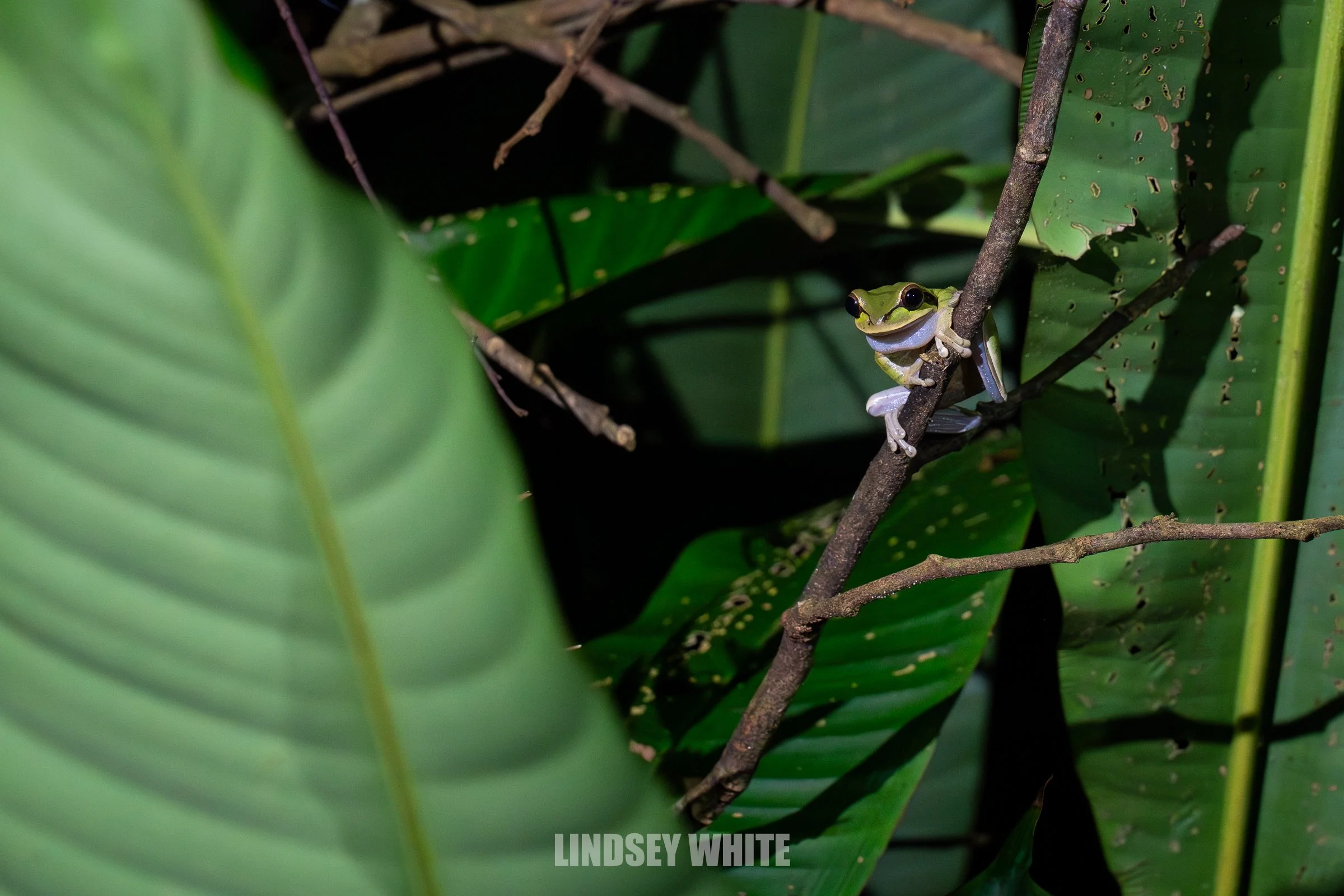
I have no commentary for this other than it is a perfect example of perfection. The masked tree frog (Smilisca phaeota), aka New Granada cross-banded tree frog, may not be the quintesential red-eyed tree frog folks usually picture when they think of tree frogs, but to me, they’re the perfect frog. They don’t mind disturbance and are super adaptable to a range of habitats. Plus look at it. It’s ADORABLE.
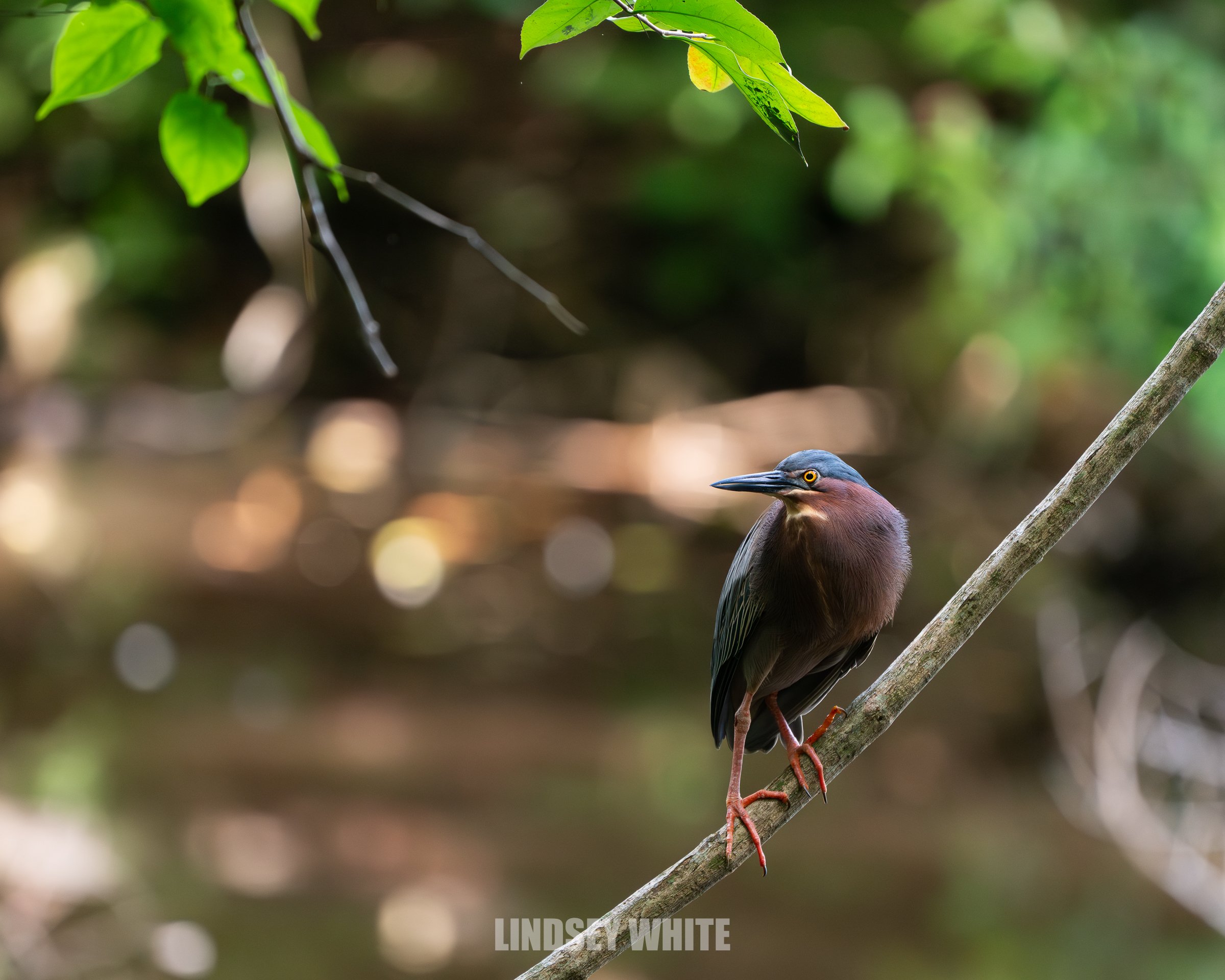
A green heron (Butorides virescens) spent some time hanging out on a vine, so I sat quietly and watched it hunt. It would perch on this vine hanging low across the water, stare at the water, and when it saw something it wanted, it would dive down quickly to try to snag it. Fun fact: green heron will sometimes drop insects or small branches into the water to “bait” fish.
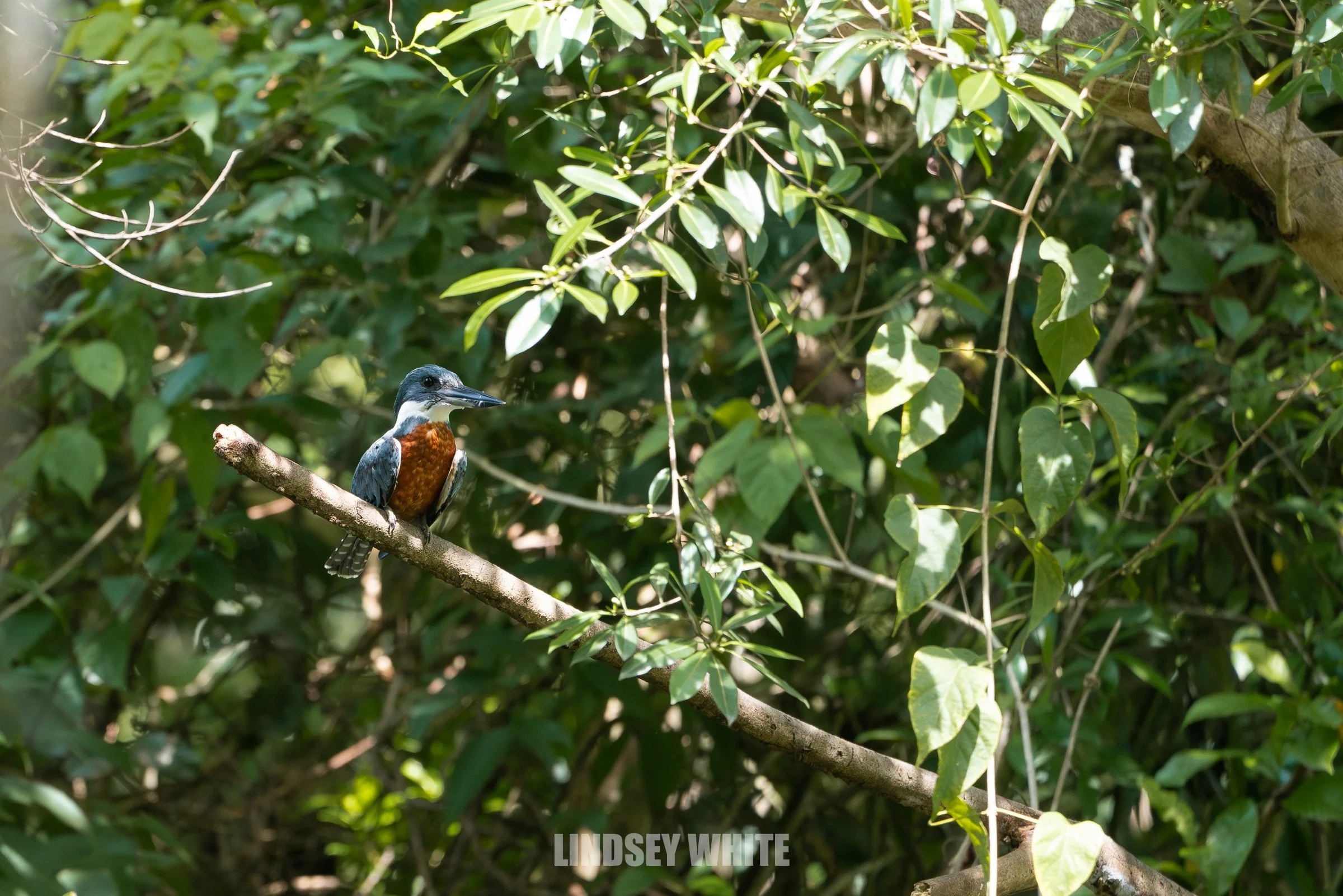
A ringed kingfisher (Megaceryle torquata) and a real pal. I watched him do a little preening, have a snack, and then do the bird equivelant of screaming into the void. It was magical.
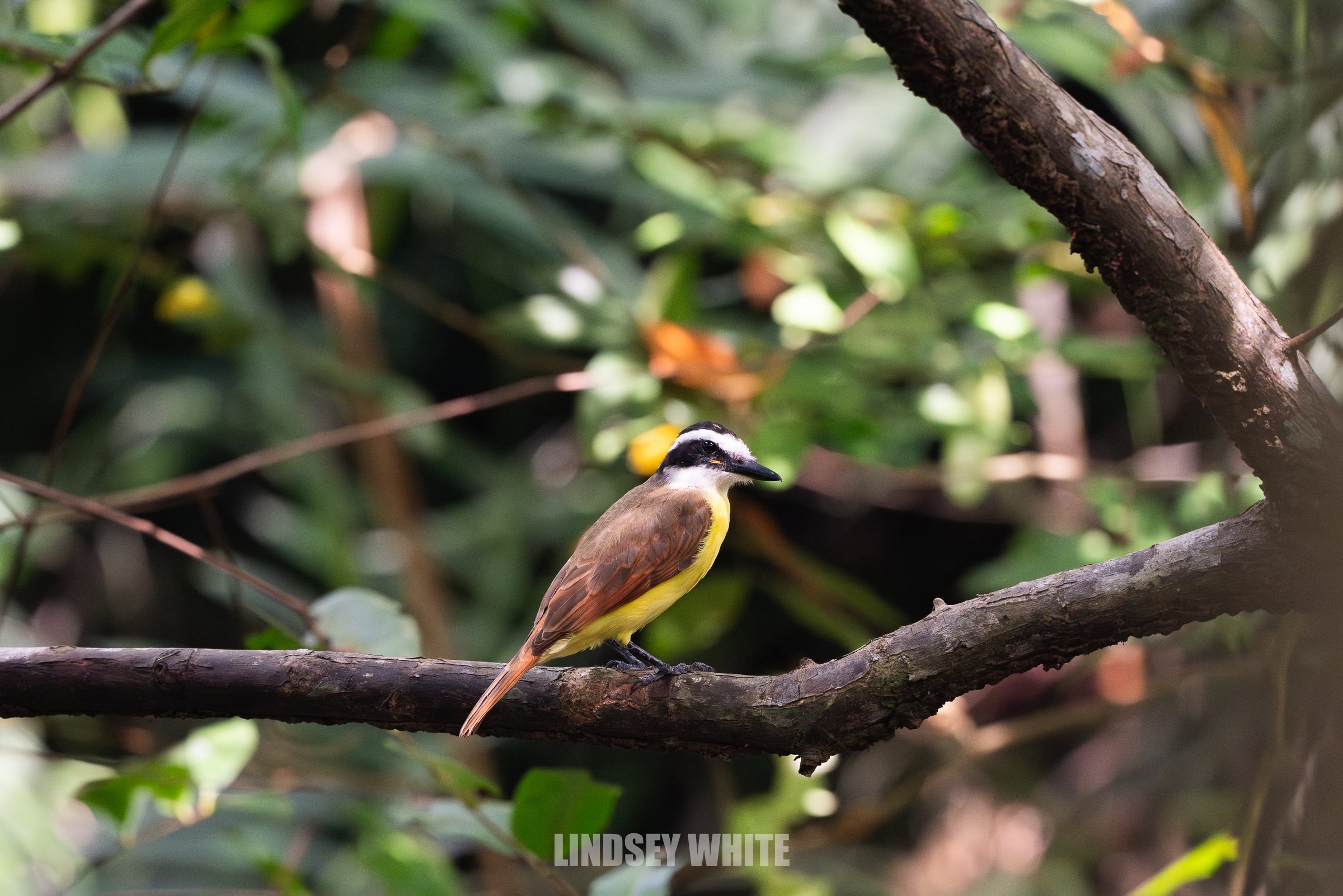
It was so cool getting to see these guys in Costa Rica. I’ve seen lots of Great kiskadees (Pitangus sulphuratus) in Texas, so I was very excited to see a familiar face (beak?).
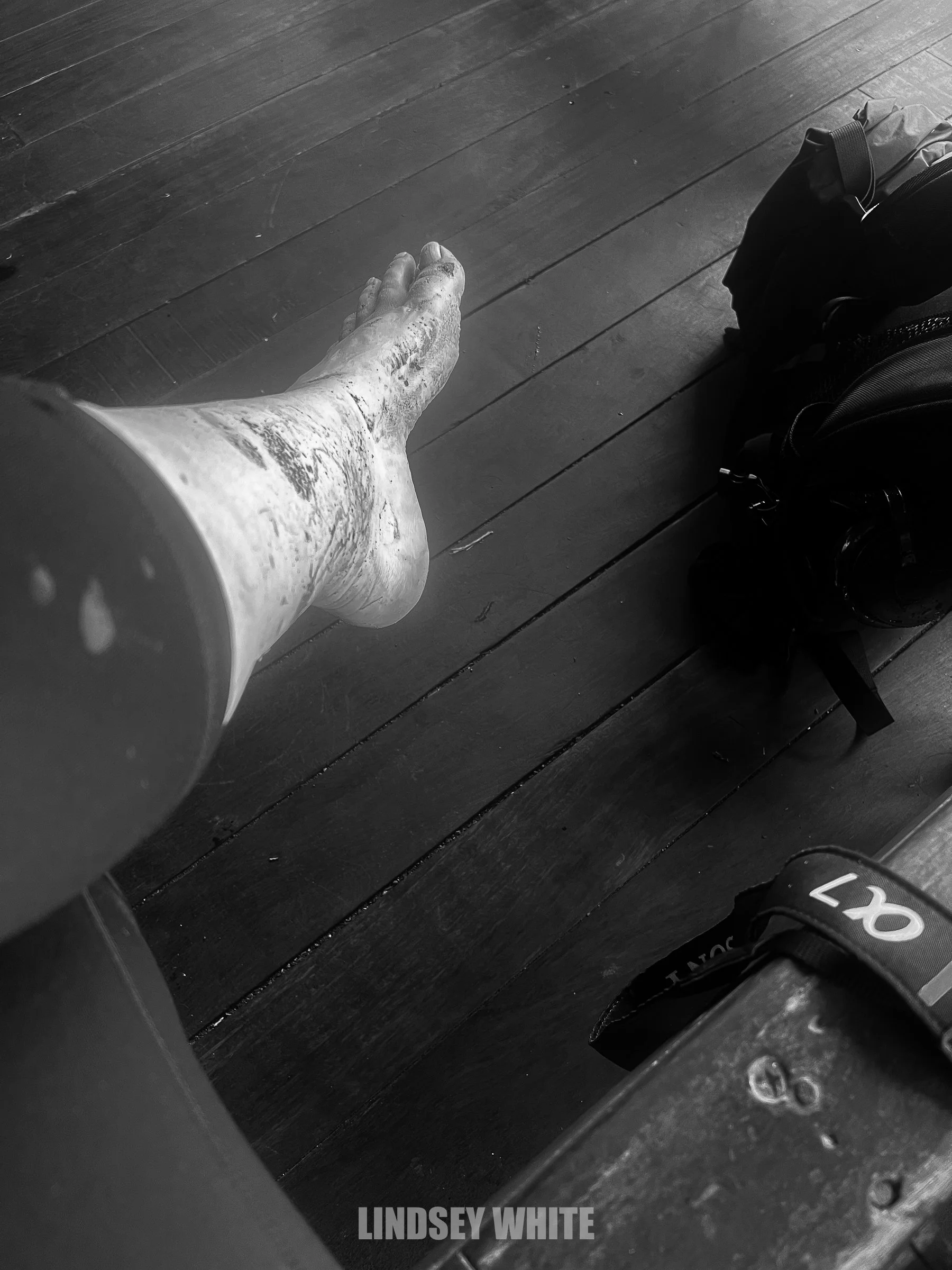
It rained the entire day I was at Corcovado. My feet were soaked, but I wore sandals so at least they were getting air. I definitely had sympathy for the folks I saw in soggy boots. I was covered in mud. Zero photos of the four species of new world monkey we saw, but I wouldn’t have changed a thing.