Whooping Crane Fest ‘26
It’s been a while since I went to the WCF at Port Aransas. So I convinced a friend it would make a top tier girl’s trip. And that camping would be, like, SO FUN. My friend is not much of a camper (though we are setting out to change that) and she’s not really that much of a bird nerd (though we are working on that, too). She works in medical research. When she told her colleagues where she was going on “vacation”, they were both confused on what a Whooping Crane Festival is and why someone would consider this trip a vacation.
Anyway, we went, we saw, we whooped.
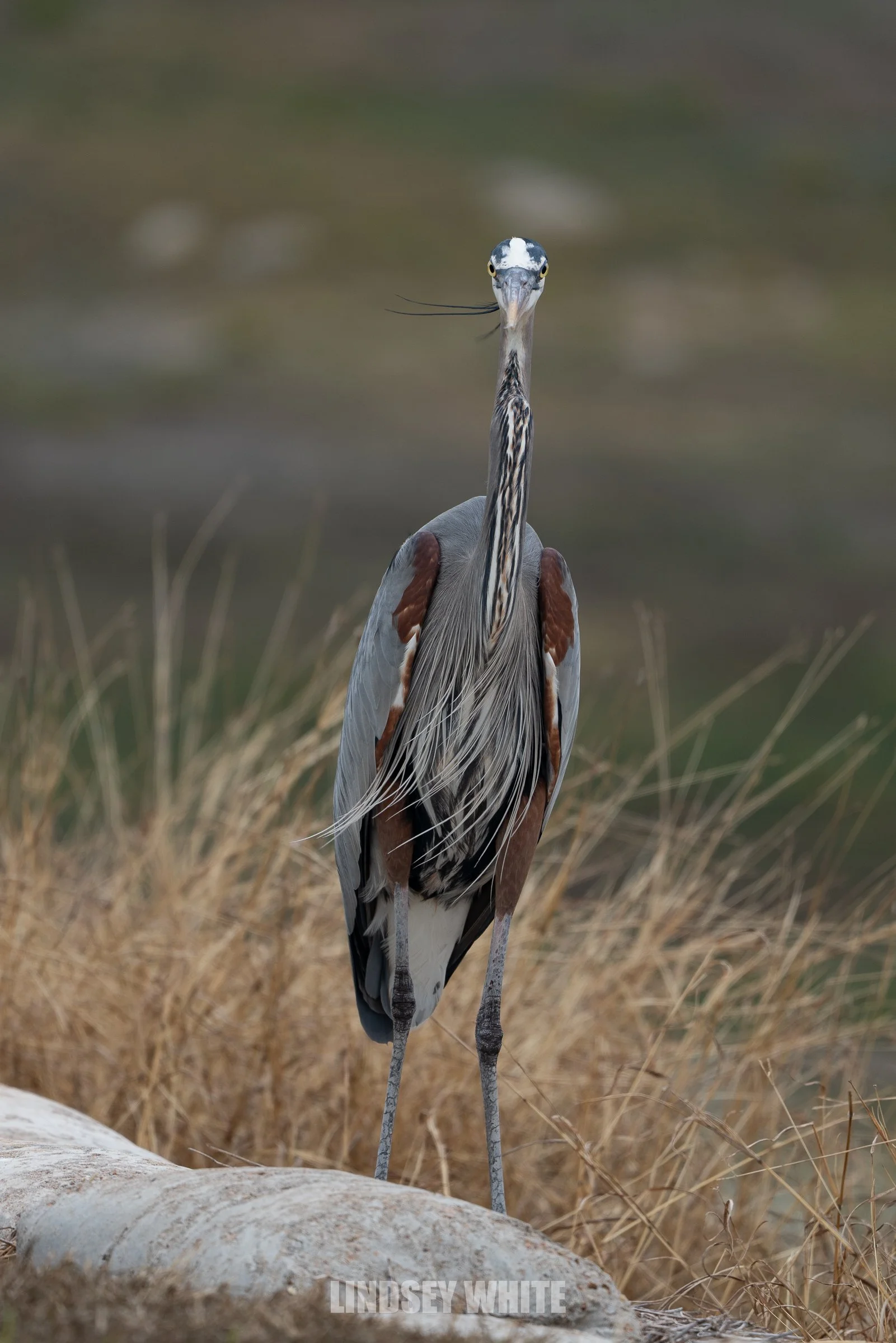
Bird watching goes both ways. I will never NOT laugh at a photo of a heron taking straight on. Absolutely ridiculous.
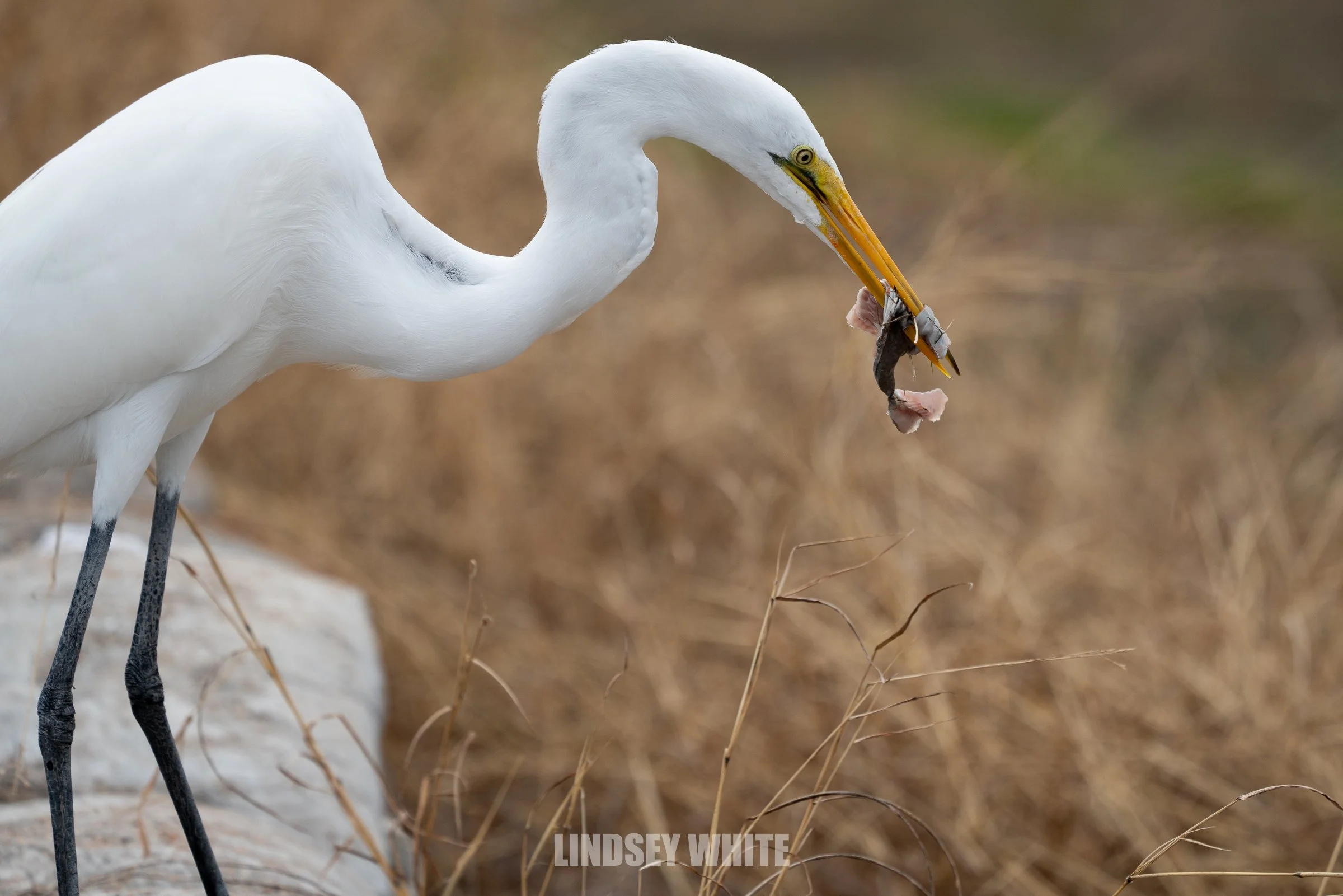
This Great egret (Aldrea alba) knew what was up. He hung out where the fish cleaning station was and waited for the fishermen to toss out unusable parts. Work smarter, not harder y’all. Also, I will forever refer to them as the “GREAT Egret” because “Common egret” is so demoralizing.

During our boat tour, we saw more barges hauling chemicals than we did whooping cranes.
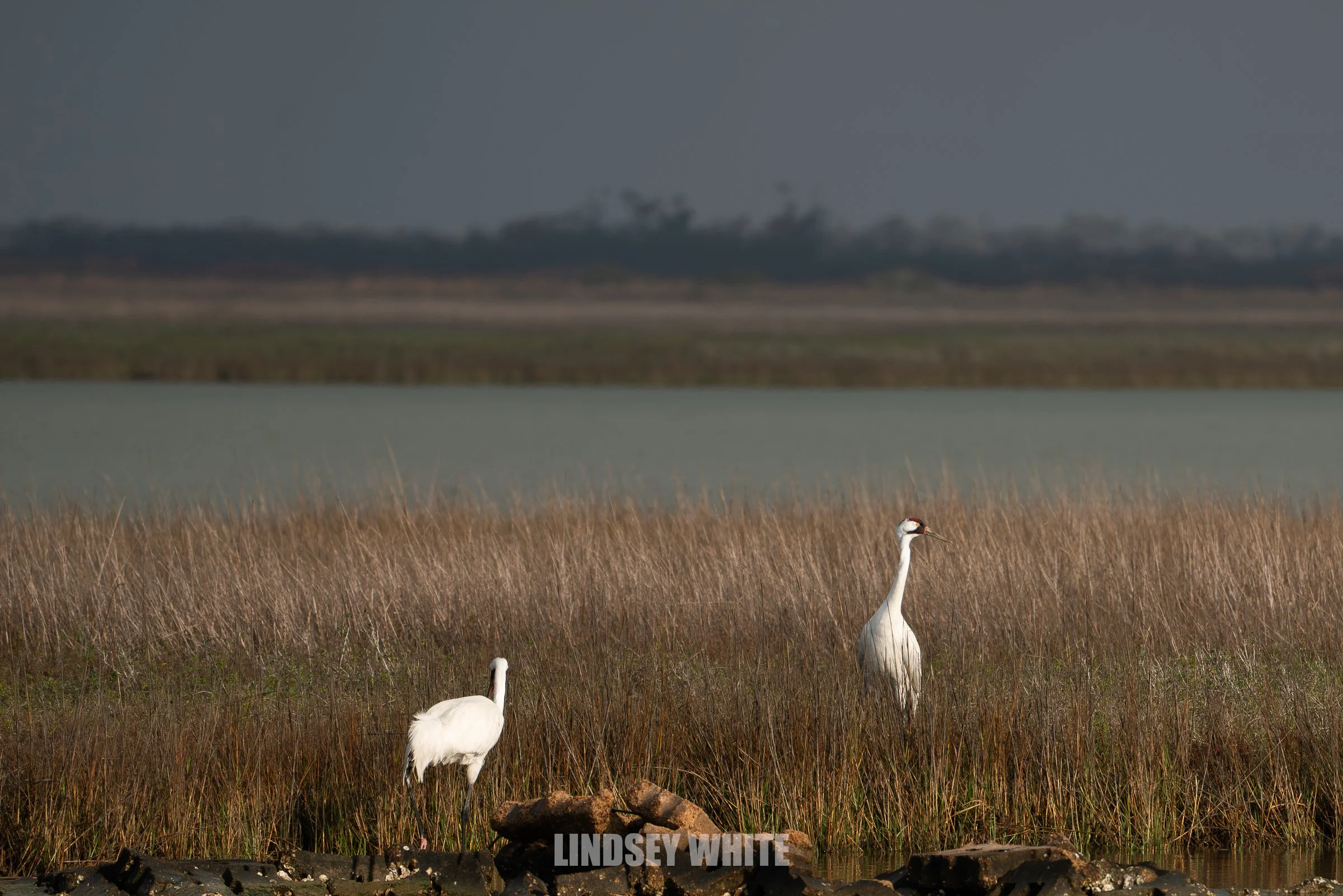
Look at them, y’all.
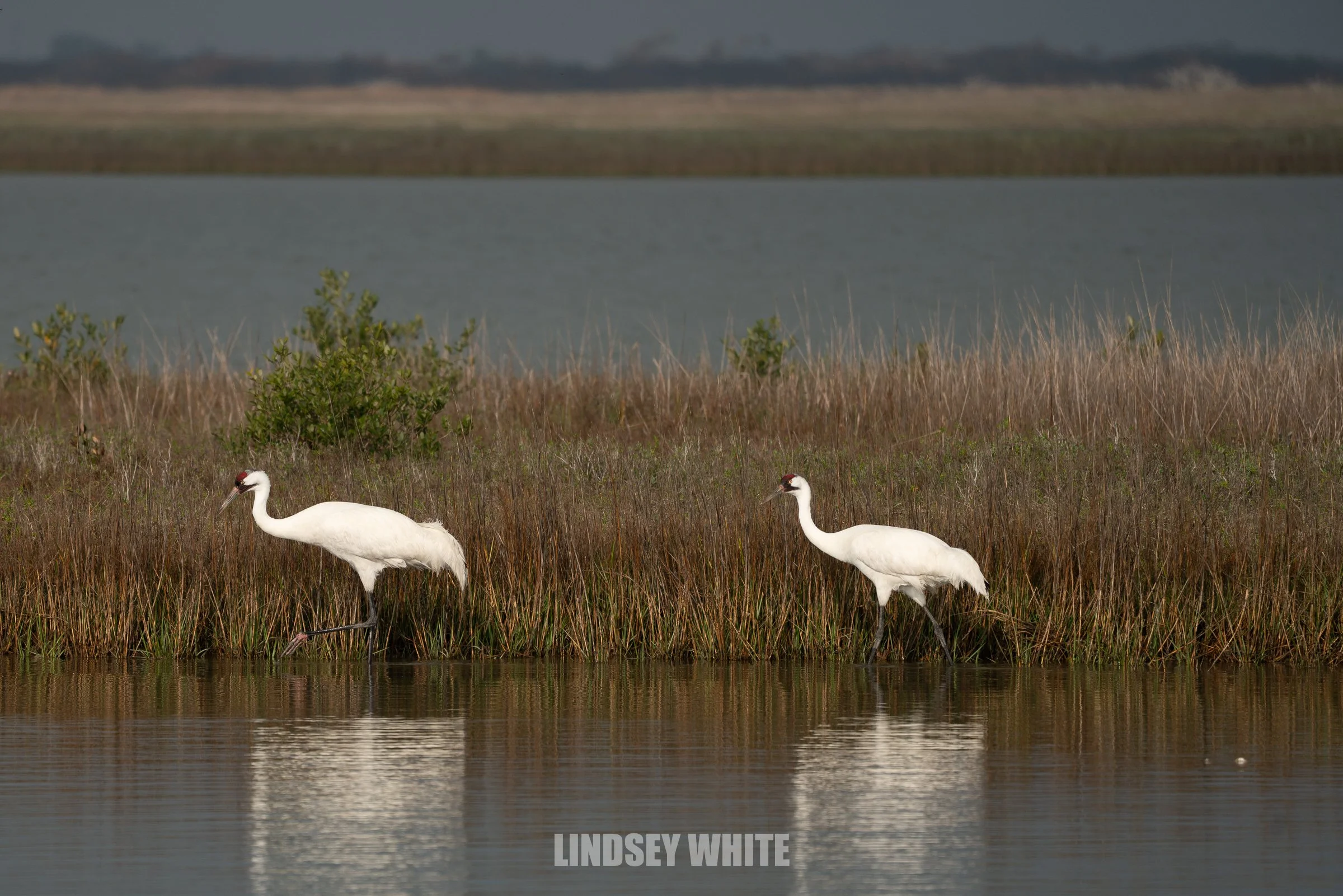
Just… look at them.
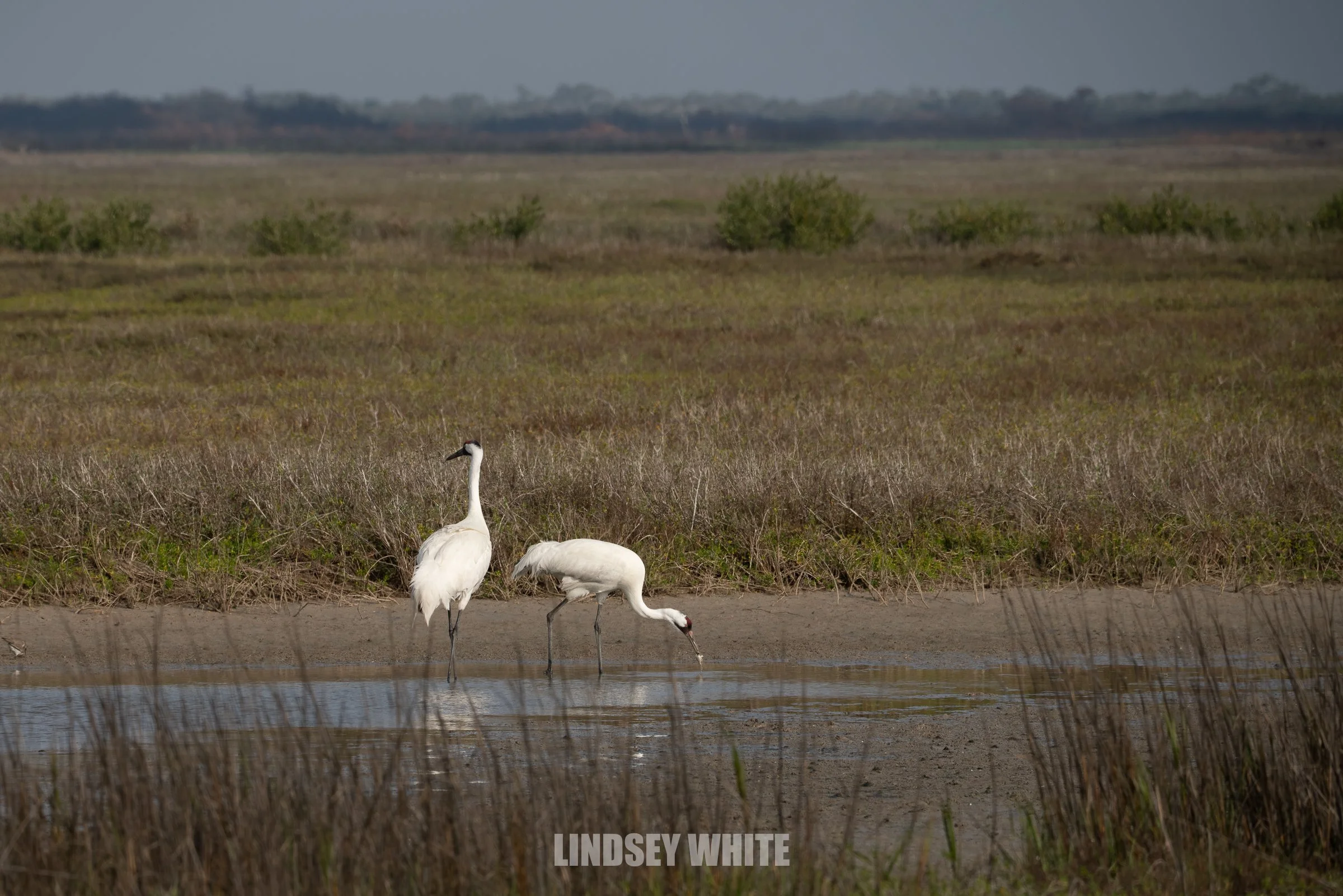
Grus americana. Literally magestic. The best birds. Fact.
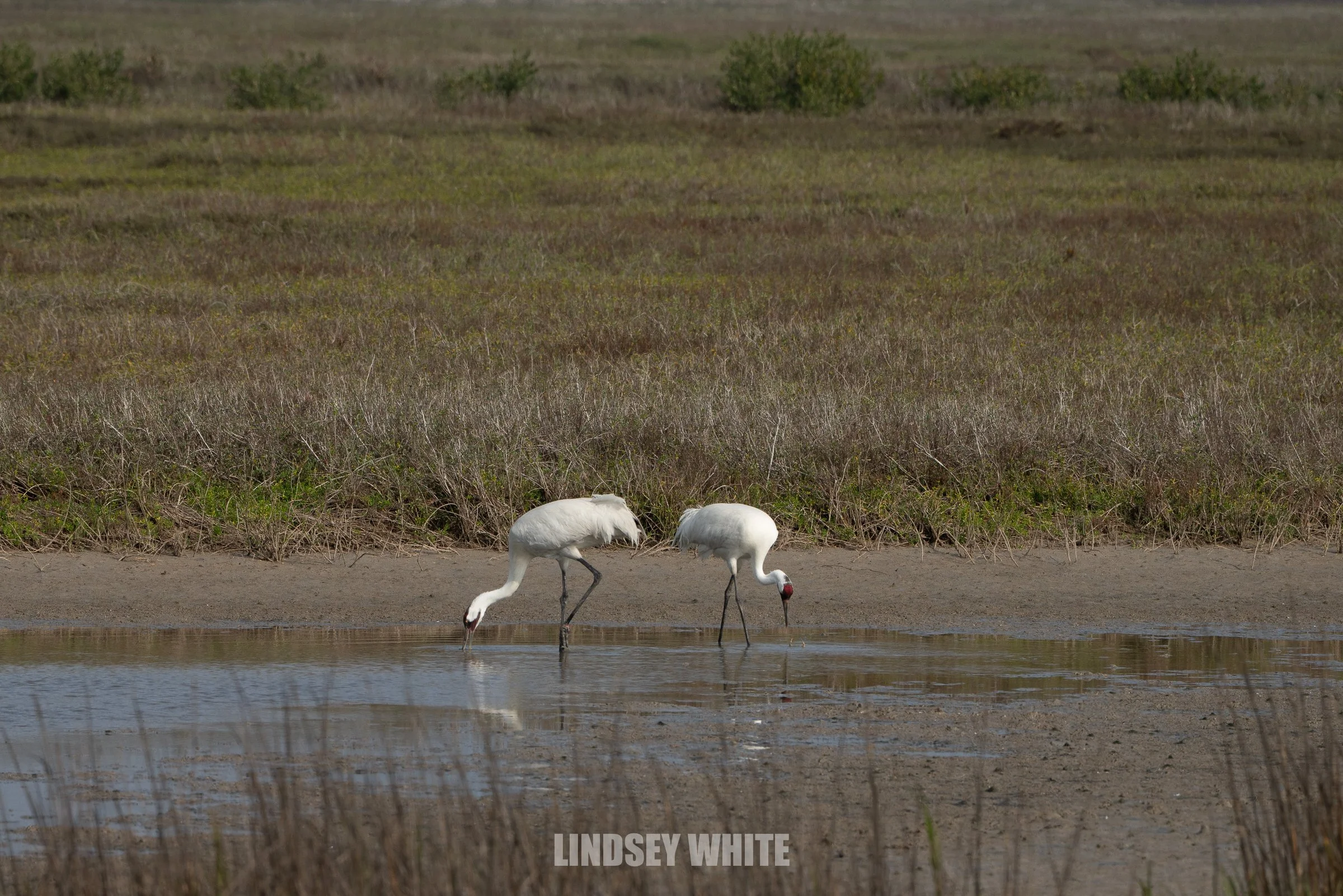
Whooping cranes are pretty incredible. If you don’t know their story, the short and very simplified version is that due to hunting and habitat loss, the species went from over 1,000 individuals in the mid 1800s to fewer than 20 of them by 1930. Scientists, conservationists, landowners, government agencies, and zoos teamed up and worked together on saving habitat and introducing captive bred birds back to the wild. It’s an INCREDIBLE story of the results we can achieve when we work toward a common goal.
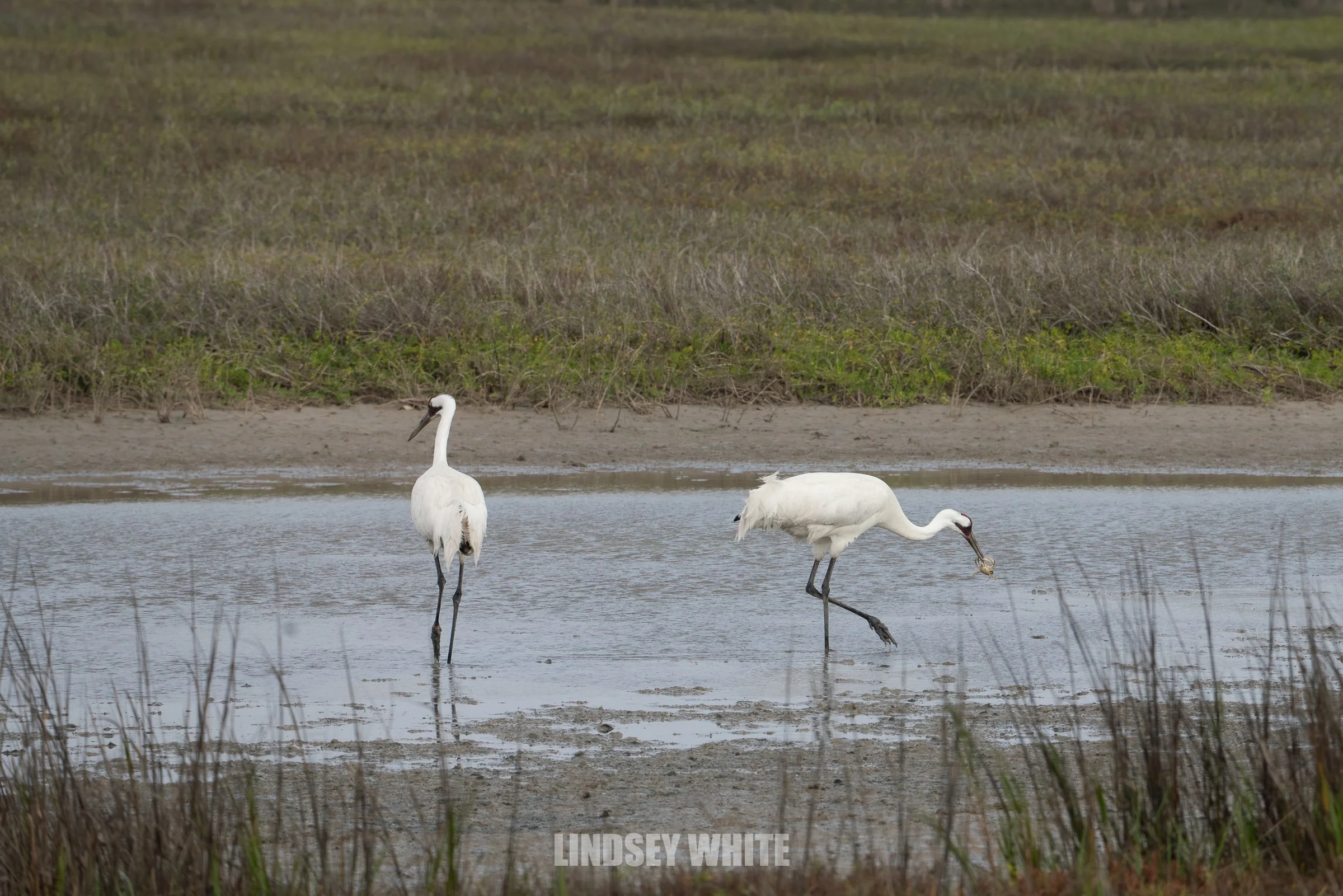
Birds in the Woods Buffalo-Aransas flock migrate over 2,400 miles a year. They breed and rear their young in Canada, then fly south in the winter to the Texas coast. This is the last remaining “natural” population in the wild. Other populations were all introduced by humans. Which is cool, and necessary given we’re the ones that got rid of them in the first place. But there’s something truly special about the Woods Buffalo - Aransas population.
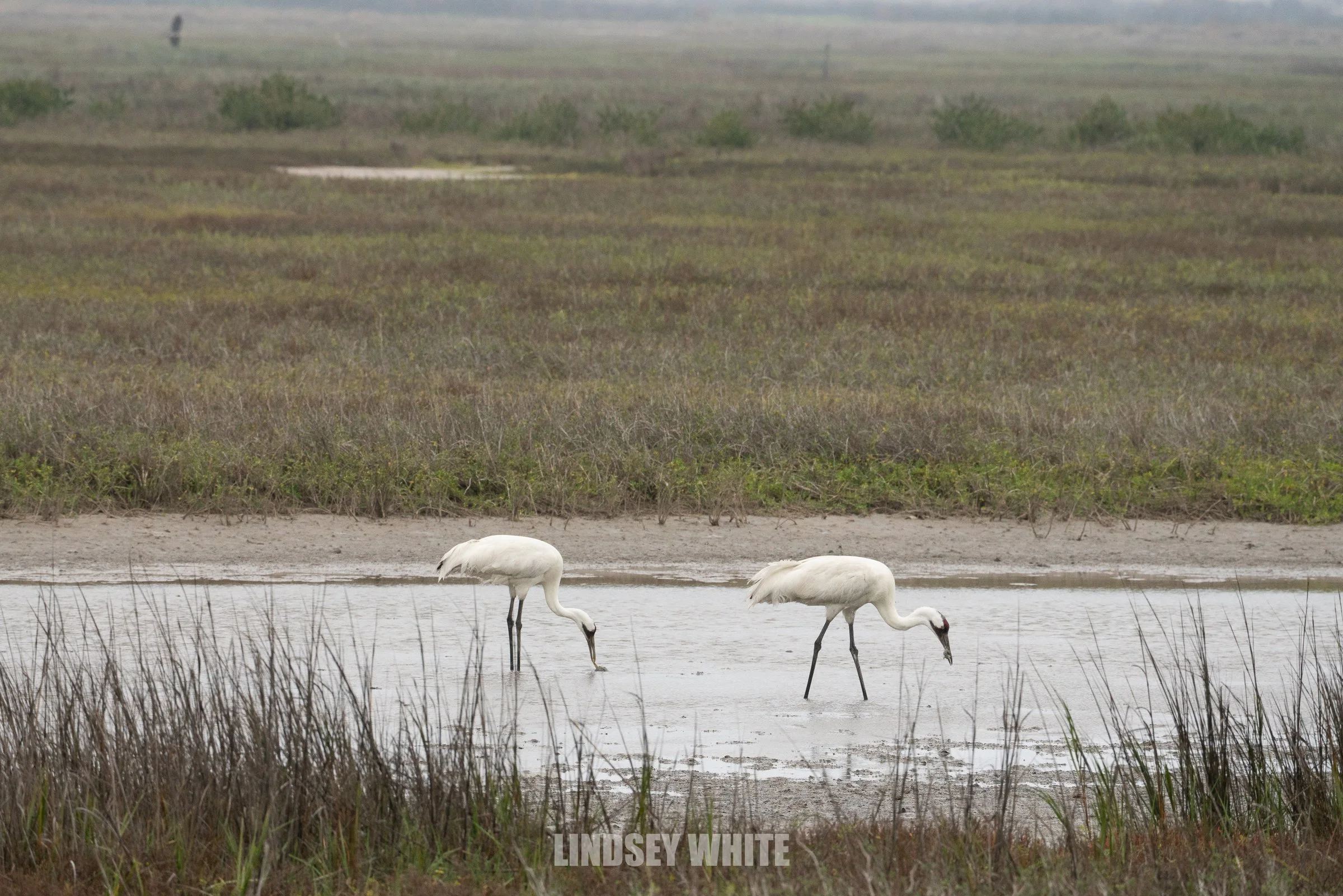
Whoopers are slow to reproduce, laying only 1 or 2 eggs per year and usually wind up putting all the parenting efforts into one chick. While mortality for chicks is pretty high and only around 20% survive to adulthood, once they become adults they tend to have high survival rates. Being 5ft tall, there aren’t a lot of things that predate the adults - black bears, alligators, gray wolves… humans…
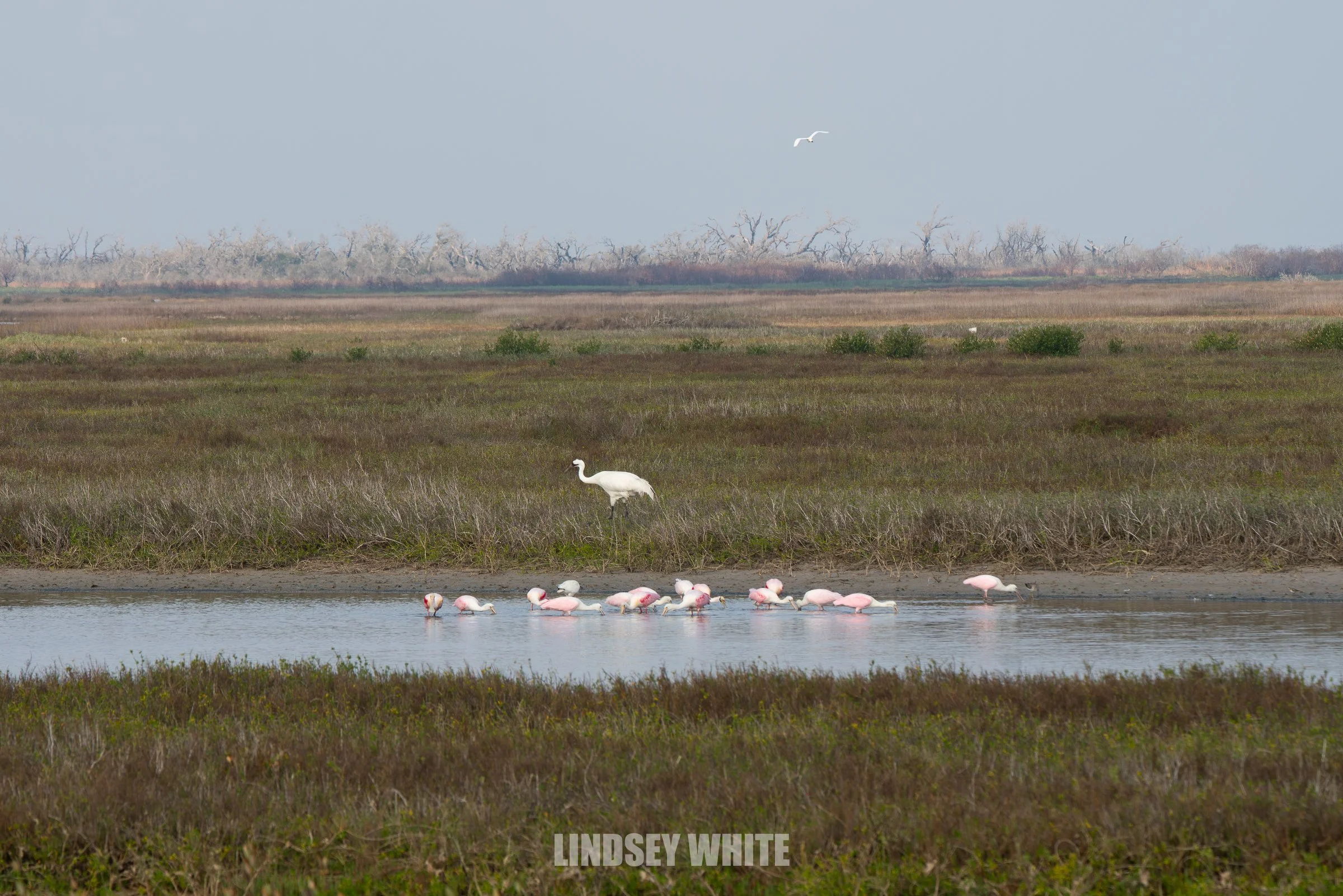
Roseate spoonbills (Platalea ajaja) nom on some tasty snacks. I had to sit on this boat and listen to the tour guide give false information about these birds and their pink color. They are not, in fact, born pink (despite what some tour guides might try to convince you of). They get their pink the same way flamingos do; through the food they eat.
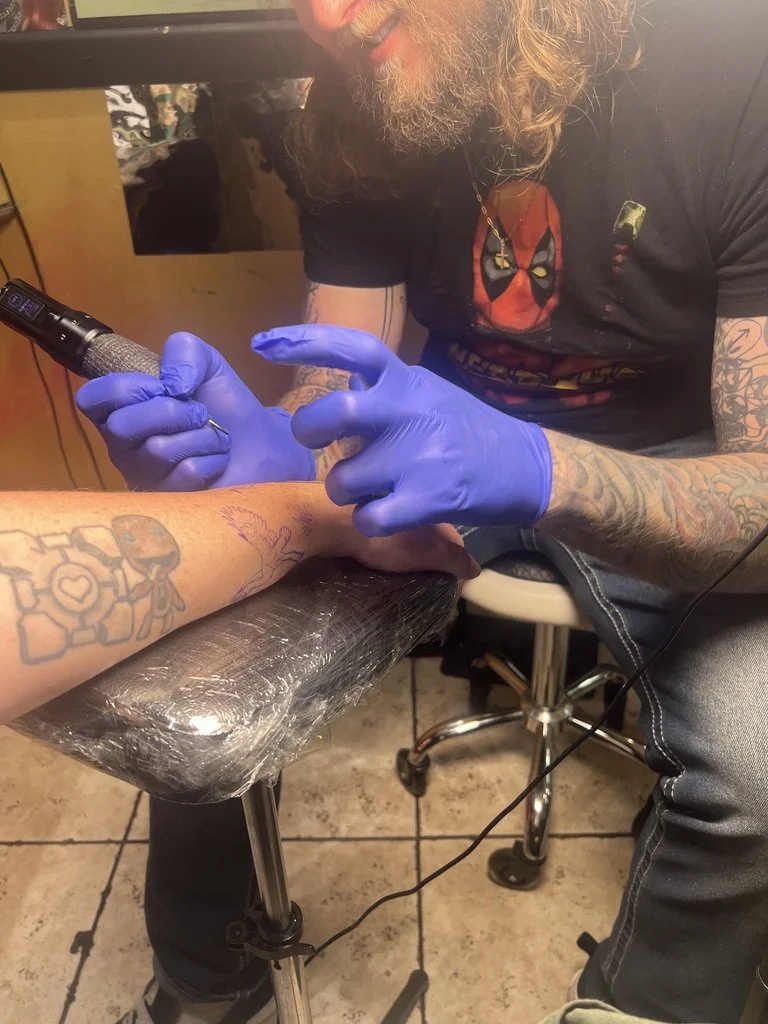
Thanks to Porter Hall for yet another whooping crane fest honorary whooper tattoo. I have the whole family now. Time to move onto their food sources probably.
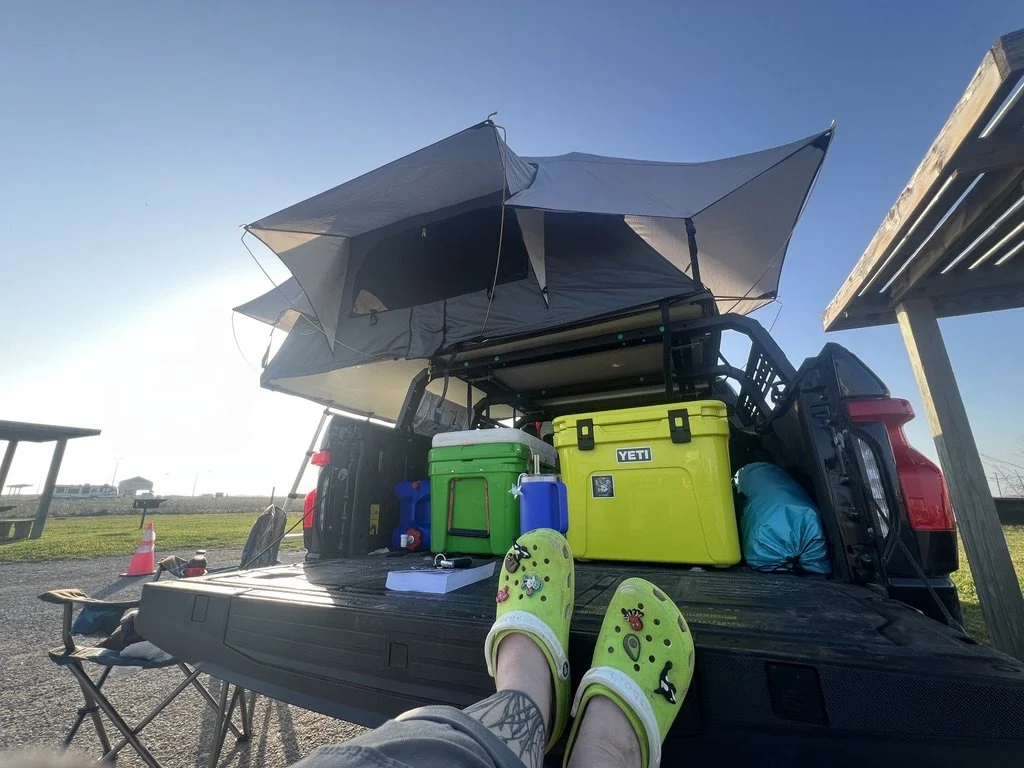
Sandy feet and our “camp” at Mustang Island State Park. I’m old and if I don’t have to sleep on the ground, I won’t be.